Online or onsite, instructor-led live Soft Skills (also known as people skills, interpersonal skills, social skills and transferable skills) training courses demonstrate through discussion and exercises how to understand the dynamics of human relations in a business environment and how to apply Soft Skills techniques, habits and mindsets to improve relationships as well as business results, while creating a more fulfilling experience in work and life.
Soft Skills training is available as "online live training" or "onsite live training". Onsite live Soft Skills trainings in Gdansk can be carried out locally on customer premises or in NobleProg corporate training centers.
NobleProg -- Your Local Training Provider
Gdańsk
Hotel Fahrenheit, Grodzka 19, Gdańsk, Poland, 80-841
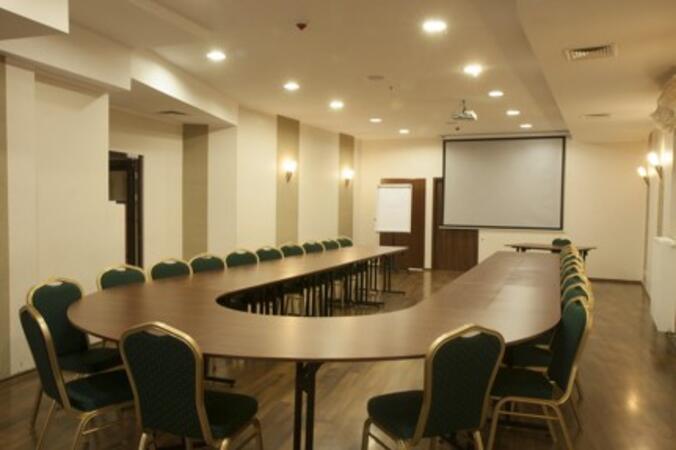
The training room is located in the very heart of the picturesque Gdansk Old Town, making the surroundings not only inspiring but also exceptionally attractive for participants. Within close proximity, you can find the railway and bus stations, facilitating arrival for those traveling by both train and bus. Additionally, the airport and port are also within reach, making this location convenient for individuals coming from distant places, both domestically and internationally.
This instructor-led, live training in Gdansk (online or onsite) is aimed at beginner-level office managers who wish to learn knowledge and skills in filing techniques and documentation management.
By the end of this training, participants will be able to:
Understand the principles of effective filing systems.
Learn techniques for managing and controlling both physical and electronic documents.
Develop skills in creating, maintaining, and archiving records.
Apply best practices for documentation management to improve organizational efficiency.
This instructor-led, live training in Gdansk (online or onsite) is aimed at beginner-level professionals who wish to explore fundamental ethical theories, develop ethical decision-making skills, and understand the role of protocol in maintaining integrity and professionalism.
By the end of this training, participants will be able to:
Understand fundamental ethical theories and principles.
Develop skills for ethical decision-making.
Recognize the significance of protocol in professional settings.
Learn to navigate ethical dilemmas and conflicts of interest.
Understand the role of ethics and protocol in different industries.
This instructor-led, live training in Gdansk (online or onsite) is aimed at beginner-to-intermediate level hospitality staff who wish to enhance their skills for providing excellent service.
By the end of this training, participants will be able to:
Gain knowledge and skills in formal etiquette, focusing on hosting, dining, and serving.
Understand serving protocols and the rationale behind them, enabling staff to execute these guidelines proficiently.
Improve customer service quality, and strengthen communication and interpersonal skills for better interaction with guests.
Understand diverse cultural etiquettes and sensitivities, ensuring respectful and appropriate service to all guests.
Handle unexpected situations and guest requests professionally and efficiently.
This instructor-led, live training in Gdansk (online or onsite) is aimed at beginner-level to intermediate-level professionals and managers who wish to enhance their critical thinking, decision-making, and problem-solving capabilities in personal and professional contexts.
By the end of this training, participants will be able to:
Identify biases and logical fallacies in reasoning.
Apply critical thinking techniques to real-world scenarios.
Improve decision-making processes through structured analysis.
Enhance problem-solving strategies for complex situations.
This instructor-led, live workshop in Gdansk (online or onsite) is aimed at business professionals who wish to integrate mindfulness into their work environment to boost productivity, leadership, and well-being.
By the end of this training, participants will be able to:
Understand the science and principles behind mindfulness.
Develop self-awareness to enhance decision-making and leadership skills.
Improve concentration, productivity, and emotional intelligence.
Manage workplace stress, uncertainty, and high-pressure situations.
Foster a positive and collaborative work culture.
Apply mindfulness techniques to enhance creativity and problem-solving.
This instructor-led, live training in Gdansk (online or onsite) is aimed at intermediate-level to advanced-level commercial management professionals who wish to strengthen their interpersonal and decision-making skills for improved business outcomes.
By the end of this training, participants will be able to:
Enhance customer interactions through anticipation, assertive communication, and market knowledge.
Strengthen teamwork, adaptability, and problem-solving skills.
Develop effective decision-making, disciplined execution, and delegation techniques.
Improve negotiation, innovation, and change management skills.
This live training in Gdansk equips beginners with evidence-based tools to manage stress and build resilience. Through reflective practices and hands-on exercises, participants learn to improve adaptability, handle personal challenges, and stay open to feedback for better performance.
This highly participative course in Gdansk helps you enhance assertiveness skills through individual and group discussions. Participants will learn to overcome barriers, manage difficult situations effectively, and communicate confidently with colleagues to achieve win-win outcomes.
Enhance professional relationships in Gdansk with this interactive course. Participants will master assertiveness, active listening, and conflict management techniques. Learn to build effective team communication and apply constructive feedback strategies to achieve business goals.
Enhance your conflict resolution skills with this practical training in Gdansk. Learn to manage emotions, apply assertiveness, and use negotiation techniques to turn disputes into opportunities. Build practical strategies for effective communication and stress management in teams.
Designed for emerging leaders and managers, this course in Gdansk enhances team management efficiency and decision-making skills. Participants will learn to adapt leadership styles, resolve conflicts effectively, and master essential techniques in communication, motivation, and time management.
Stress-free time management is an approach to life and work aimed at reducing stress through effective time management, prioritization, and emotional regulation. Creating schedules, prioritizing tasks, managing emotions, relaxation practices, breathing exercises, meditation, yoga, or walks can help reduce stress and improve well-being, enabling effective time management. It is essential to find a balance between work and rest and to apply techniques that best suit your lifestyle and work environment.
A company hackathon lets teams from departments and IT try AI on their own problems and take working solutions with them. The format combines two discovery sessions beforehand with tool onboarding, a 24-hour sprint and a pitch to the management. Each team ends with a working solution and a usage plan for the following week.
This instructor-led, live training in Gdansk is aimed at: Mixed teams from departments and IT who want to try AI on their own problems and take working solutions with them.
By the end of this training, participants will be able to:
Formulate problems and bottlenecks in the own area as solvable challenges
Know eight to ten AI tools and select one for a task
Build a working solution in small teams
Evaluate solutions by benefit and feasibility
Present the result in a pitch
Define a plan for use in the following week
Format of the Course
Duration: 2 days on site (including a 24-hour sprint) plus two discovery sessions beforehand
Interactive training with a trainer, discussion and hands-on exercises on the participants' own use cases
Outcome, Beforehand: Challenges, tool selection and success criteria are defined.
Outcome, Day 1: Each team has a sharpened challenge and a first working version.
Outcome, Day 2: Each team has a working solution, a presented pitch and a plan for use from the following week.
Course Customization Options
To request a customized training for this course, please contact us to arrange.
This instructor-led, live training in (online or onsite) is aimed at team leaders and middle managers who want to adopt AI safely and effectively by addressing the human factors that drive success: trust, accountability, decision habits, and psychological safety.
By the end of this training, participants will be able to:
Define when to use AI and when not to (stop rules).
Verify AI outputs with practical standards (red flags, second source).
This hands-on workshop is tailored to the tasks of one team and uses the AI tool already approved in the company. It covers prompting techniques, lasting setups such as projects and assistants, working with files and safe use. The group leaves with a shared prompt collection and solved tasks from its own daily work.
This instructor-led, live training in Gdansk is aimed at: Teams from case processing, specialist departments, research or IT support who already have first experience with AI and want better results for their own tasks.
By the end of this training, participants will be able to:
Understand what happens in the model when prompting and why models invent details
Write instructions with role, task, context, examples, format and limits
Break down large tasks and improve results in a targeted way
Use instructions, memory, projects and own assistants on a lasting basis
Work with files, scans, tables and research assignments
Verify results, recalculate figures and protect data
Secure own templates for the group and reuse them
Format of the Course
Duration: 1 day (7 hours) or 2 sessions of 4 hours per group, online or on site, up to 15 participants
Interactive training with a trainer, discussion and hands-on exercises on the participants' own use cases
Outcome, Block 1: Each participant has at least one verified template for their own work.
Outcome, Block 2: Each group has a shared prompt collection, a shared project and two solved tasks from real daily work.
Course Customization Options
To request a customized training for this course, please contact us to arrange.
This live training in Gdansk (online or on-site) is aimed at leaders who want to strengthen their leadership competencies, improve team communication, and learn how to effectively delegate tasks and manage difficult situations.
By the end of this training, participants will be able to:
Recognize and develop their unique leadership style.
Communicate effectively, building authority and trust within the team.
Conduct difficult conversations and provide constructive feedback.
Delegate tasks effectively and evaluate team performance.
Manage stress and provide emotional support to team members.
Create coherent development plans for themselves and their teams.
The training program in Gdansk focuses on developing assertive communication with internal clients. Participants learn to consciously express agreement and refusal, supporting the building of partnership relationships based on understanding. The sessions combine psychological knowledge with practical exercises.
Browser agents can read web pages, compare vendors and fill in forms on behalf of the user. This one-day course covers ChatGPT Agent and Atlas, Claude in Chrome and Perplexity Comet, suitable tasks and the risks, such as hidden instructions on web pages. Participants hand over two tasks, verify the results and define rules for the team.
This instructor-led, live training in Gdansk is aimed at: Specialist users, assistants and researchers who want to hand over recurring work on web pages and in web applications to AI agents.
By the end of this training, participants will be able to:
Understand how browser agents read pages, click and fill in forms
Classify ChatGPT Agent and Atlas, Claude in Chrome and Perplexity Comet
Select suitable tasks such as research, comparisons and form work
Formulate assignments with goal, limits and approval points
Recognize and limit risks such as hidden instructions on web pages
Define rules for use in the team
Format of the Course
Duration: 1 day (7 hours)
Interactive training with a trainer, discussion and hands-on exercises on the participants' own use cases
Outcome, Day 1: Each participant has handed over two tasks to a browser agent, verified the results and defined rules for use in the team.
Course Customization Options
To request a customized training for this course, please contact us to arrange.
This course offers a comprehensive and practical introduction to the phenomenon of burnout, one of the most pressing challenges in modern workplaces. Participants will explore the difference between stress and burnout, identify personal and professional risk factors, and learn how to recognise early signs of exhaustion — both in themselves and in others.
Through guided reflection, self-assessment tools, and group discussions, the programme encourages participants to develop awareness, resilience, and personal coping strategies. It also highlights the role of organisations and leaders in creating a supportive environment that prevents burnout and promotes psychological wellbeing.
The session combines theory, self-diagnosis, and practical exercises to ensure that every participant leaves with a clear action plan for maintaining balance and energy in their professional life.
A Customer Care Course is designed to educate participants on the fundamentals of providing exceptional service and care to customers. It focuses on treating customers with respect and kindness, building an emotional connection, and ensuring their satisfaction and loyalty. These courses cover a range of topics, including communication skills, time management, de-escalation techniques, and industry best practices. Through real-life examples and practical exercises, learners gain insights into effectively handling customer inquiries, complaints, and feedback. The aim is to equip individuals with the necessary skills to deliver professional, helpful, and high-quality service across various customer interaction points, enhancing the overall customer experience.
Change management is a process aimed at effectively implementing change within an organization to achieve desired goals and adapt to changing environments. It requires understanding the reasons why change is necessary and identifying areas that need modification, as well as clearly defining the objectives and benefits that the change will bring. Change management is a dynamic process that demands flexibility, openness to feedback, and readiness to adjust strategies based on people's reactions and changing conditions. It is also crucial to recognize that changes are not always easy, which is why it is important to create a plan that takes into account both organizational goals and individual needs during the change process.
ChatGPT includes projects, custom GPTs, deep research, connectors and an agent mode in addition to the chat. This two-day course moves from everyday use to shared projects, custom GPTs and multi-step tasks, with clear rules for the team. Participants work with their own anonymized material throughout.
This instructor-led, live training in Gdansk is aimed at: Employees and teams who use ChatGPT Plus, Business or Enterprise and want to move from single chats to projects, custom GPTs and agents.
By the end of this training, participants will be able to:
Classify the models, plans and data protection options of ChatGPT
Achieve lasting better results with instructions, memory and projects
Analyze files, tables and data and cross-check the results
Edit texts in Canvas and create graphics for presentations
Build a custom GPT without code and share it in the workspace
Use deep research, connectors and the ChatGPT agent for multi-step tasks
Define limits, approval points and rules for use in the team
Format of the Course
Duration: 2 days (7 hours each)
Interactive training with a trainer, discussion and hands-on exercises on the participants' own use cases
Outcome, Day 1: Each participant has own standing instructions, a verified data analysis and a revised text from their daily work.
Outcome, Day 2: Each participant has a project, a shared custom GPT and a verified piece of research. The team knows the agent, connectors and its own rules.
Course Customization Options
To request a customized training for this course, please contact us to arrange.
This interactive training in Gdansk helps team members master communication, emotional intelligence, and stakeholder management. Participants learn to manage their own behaviour, understand others, and effectively influence key stakeholders in a dynamic business environment.
This interactive course in Gdansk helps managers and team leaders master communication and influence skills. Participants learn to manage stakeholder relationships, handle difficult office situations, and lead effectively by understanding leadership versus management styles and delivering change.
Boost your b2b and b2c sales effectiveness with this practical training in Gdansk. Learn modern models, tools, and techniques to master sales psychology, diagnose customer needs, and build compelling business cases. Practice objection management and value defense to close more deals.
Project work in Microsoft 365 spreads across Teams, Planner, Lists and SharePoint, and much of the effort goes into status reports and follow-up. This one-day course shows how Copilot and agents can support status reporting, meetings, tasks and risk detection. Participants build a project knowledge agent and a mock-up for a real project problem.
This instructor-led, live training in Gdansk is aimed at: Project managers, PMO staff, team assistants and project members who work in Microsoft 365 with Teams, Planner, Lists and SharePoint.
By the end of this training, participants will be able to:
Classify the agents in Microsoft 365 for project work
Create status reports from emails, meetings and lists with Copilot
Use agents in Teams and Planner for meetings and tasks
Build a project knowledge agent with documents, lessons learned and contacts
Make risks and delays visible earlier
Build a solution for a real project problem as a mock-up and present it
Format of the Course
Duration: 1 day (7 hours)
Interactive training with a trainer, discussion and hands-on exercises on the participants' own use cases
Outcome, Day 1: Each participant has a status report, a tested project knowledge agent and a presented mock-up for a real project problem.
Course Customization Options
To request a customized training for this course, please contact us to arrange.
This course is designed to enhance your ability to think strategically, equipping you with the skills to approach complex situations, avoid biases, and make well-informed decisions swiftly and accurately. Through a structured exploration of various thinking styles and the common pitfalls in strategic thinking, you will develop a comprehensive understanding of how to apply strategic thinking in your professional activities.
Critical Thinking in the Workplace is a practical, interactive programme designed to help professionals analyse information more effectively, challenge assumptions, identify the real causes of problems and make better decisions.
Participants learn a structured approach to critical thinking that can be applied to everyday workplace challenges, from analysing complex problems and evaluating evidence to generating alternative solutions and making well-reasoned decisions.
The programme combines analytical thinking, problem solving, creative thinking and decision making. Throughout the course, participants work with practical exercises, discussions and case studies relevant to their roles and industry. Wherever possible, the training can incorporate the client's own business challenges and real workplace scenarios.
The "DNA of a Leader" course focuses on developing leadership skills, establishing leader identity, and enhancing team awareness. Participants explore elements such as self-assessment, building authority, emotional intelligence, assertive behavior, and managing difficult employee situations. The training also covers strategic thinking, time management, management tools, and fostering strong team relationships.
Effective interpersonal communication is a key skill in both personal and professional relationships.
It involves focusing on the speaker and understanding their perspective, expressing interest in what they say,
using clear and simple messages to avoid misunderstandings, understanding and appreciating others' feelings, needs, and viewpoints. Effective communication means expressing your thoughts and emotions responsibly without violating others' boundaries,
with an awareness of cultural differences that help avoid misunderstandings arising from intercultural communication.
Effective interpersonal communication is essential for building lasting relationships, resolving problems, teamwork, and achieving success both in professional and personal life. It is a skill worth continuously developing and refining.
This instructor-led, live training in Gdansk (online or onsite) is aimed at beginner-level / intermediate-level / advanced-level individuals who wish to provide practical tools for navigating conflicts, delivering constructive feedback, and maintaining professional authority under pressure. This training is specifically crafted to help professionals bridge the gap between technical expertise and interpersonal influence, ensuring their ideas are not just heard, but understood and acted upon.
By the end of this training, participants will be able to:
This practical training in Gdansk helps you build strong interpersonal skills. It covers emotional intelligence, effective communication, and conflict resolution strategies to help you manage relationships with colleagues, stakeholders, and customers more effectively.
Organizations such as Pfizer, Hewlett Packard, Dell EMC, and VMware have leveraged this programme to develop a more balanced influencing style and build resilient, adaptive responses to workplace challenges. Whether your goal is to create high-performing work teams, consistently win contracts through expert pitching, successfully negotiate optimal terms, or systematically build shareholder value, this programme provides the behavioral precision and strategic alignment needed to drive measurable impact.
Participants will move beyond foundational communication into advanced influence architecture, learning to calibrate their style, navigate resistance, secure commitments, and scale collaborative impact across complex organizational networks.
The Ishikawa Diagram, also known as the fishbone diagram or cause-and-effect diagram, is a tool created by Kaoru Ishikawa. It is used to visually depict the potential causes of a specific event or problem, facilitating the analysis of the factors that might contribute to a particular issue. The diagram resembles the skeleton of a fish, hence the name "fishbone," and is used to identify and organize the causes of an issue systematically. It is particularly useful in product development and quality management processes, where identifying the root causes of problems is crucial. The Ishikawa Diagram helps teams brainstorm and categorize causes, such as methods, machinery, materials, manpower, and environment, to find the root cause of a quality or performance problem.
These interactive workshops in Gdansk teach you to tailor your communication style to various client types. Participants will master techniques for handling difficult situations, managing emotions, and eliminating common errors. Practical exercises ensure effective interactions.
Cultural differences can have a significant impact on teamwork. Different cultures may prefer different communication styles, such as direct, indirect, expressive, or more evasive. This may lead to differences in the interpretation of messages. Gestures, tone of voice, and words used can have different meanings in different cultures. Something that is acceptable in one culture may be offensive in another. Different cultures may have different approaches to hierarchy in the workplace. Some cultures may be more hierarchical, where decisions are made by people higher up in the hierarchy. Cultures differ in their approach to working time and deadlines. Some cultures may value punctuality more, while others may be more flexible. Different cultures may have different approaches to conflict. Some cultures may avoid confrontation, while others may prefer open conflict resolution. In some cultures, decisions are made after consultation and team discussions, while in others decisions are made by a single leader. Different cultures have different perceptions and approaches to diversity. It is important to build awareness and respect for cultural differences in the workplace. In teamwork, it is crucial to understand and respect cultural differences. Building an atmosphere of open communication, respect and flexibility in accepting diversity can help manage cultural differences and create an effective work environment. This also opens the door to benefiting from diversity through diverse perspectives and ideas.
Lovable builds web applications from natural language prompts, which makes it useful for internal tools, forms, dashboards and prototypes. This one-day course covers the interface, prompting, database, login and publishing, and ends with a published app and a started own use case. No programming skills are required.
The trainer, Tim Jamboula, is an official Lovable Ambassador and Cursor Ambassador.
This instructor-led, live training in Gdansk is aimed at: Specialist users, project leads, founders and teams who want to build internal tools, forms, dashboards or prototypes themselves.
By the end of this training, participants will be able to:
Understand how AI-assisted building works and when Lovable is the right tool
Operate the interface confidently, including Plan, Build and Visual Edits
Prompt according to five principles and use knowledge and skills
Set up database, login, storage and connectors
Publish an app safely and use the security scan
Start an own use case and know the next steps
Format of the Course
Duration: 1 day (7 hours)
Interactive training with a trainer, discussion and hands-on exercises on the participants' own use cases
Outcome, Day 1: Each participant has a published app with a database, login and live URL, and a started own use case.
Course Customization Options
To request a customized training for this course, please contact us to arrange.
Clickable prototypes created in hours can replace static mockups in discovery and stakeholder reviews. This one-day course shows product managers and designers how to build variants, map a design system, run live reviews and prepare the handover to development. Participants finish with a prototype for a feature of their own.
The trainer, Tim Jamboula, is an official Lovable Ambassador and Cursor Ambassador.
This instructor-led, live training in Gdansk is aimed at: Product managers, product owners, UX, UI and service designers, and discovery teams.
By the end of this training, participants will be able to:
Master the path from briefing to clickable prototype in a single session
Build several variants in parallel and refine them with user feedback
Map a design system, components and brand rules in Lovable
Run stakeholder reviews with working prototypes and live changes
Decide when to hand over to development and prepare the handover
Format of the Course
Duration: 1 day (7 hours)
Interactive training with a trainer, discussion and hands-on exercises on the participants' own use cases
Outcome, Day 1: Each participant has a clickable prototype for an own feature, a stored design system and a handover document for development.
Course Customization Options
To request a customized training for this course, please contact us to arrange.
This two-day course takes a team from a short briefing to a tested, published first version. It covers prototypes, data and roles, live iteration with stakeholders, testing with users, security, publishing and the handover to developers. Participants work on their own use case throughout.
The trainer, Tim Jamboula, is an official Lovable Ambassador and Cursor Ambassador.
This instructor-led, live training in Gdansk is aimed at: Product teams, innovation managers, founders and departments who want to turn an idea into a tested prototype and a usable first version.
By the end of this training, participants will be able to:
Build a clickable prototype from a short briefing
Iterate prototypes live with stakeholders
Set up data, roles, login and integrations
Test with real users and implement feedback
Prepare security, publishing and operation of a first version
Plan the handover to a developer team
Format of the Course
Duration: 2 days (7 hours each), 6 to 12 participants
Interactive training with a trainer, discussion and hands-on exercises on the participants' own use cases
Outcome, Day 1: Each participant has a prototype with a database and login that has been improved in a simulated stakeholder session.
Outcome, Day 2: Each participant has a published, tested first version of their use case and a handover document.
Course Customization Options
To request a customized training for this course, please contact us to arrange.
Microsoft 365 Copilot is built into Outlook, Teams, Word, Excel and PowerPoint and works with the data that users already have access to. This course shows how to prompt effectively, verify results and use Notebooks, Pages and agents. Participants finish with a first FAQ agent on a SharePoint knowledge base.
This instructor-led, live training in Gdansk is aimed at: Employees and departments with Microsoft 365 Copilot, from beginners to advanced users.
By the end of this training, participants will be able to:
Distinguish Copilot Chat and the Copilots in Outlook, Teams, Word, Excel and PowerPoint
Understand which data Copilot accesses and how permissions apply
Prepare emails, meetings, reports and presentations with Copilot
Analyze Excel data and verify the results
Prompt effectively and respond when the first answer does not hold up
Use Notebooks, Pages and the Researcher and Analyst agents
Build a first simple agent on a SharePoint knowledge base
Format of the Course
Duration: 2 days (7 hours each), also available as a learning journey in 2-hour sessions
Interactive training with a trainer, discussion and hands-on exercises on the participants' own use cases
Outcome, Day 1: Each participant has implemented at least one use case in the apps and has two saved prompts for their own work.
Outcome, Day 2: Each participant has a notebook, a verified Researcher result and a tested FAQ agent. Each group has presented a solution idea with a mock-up.
Course Customization Options
To request a customized training for this course, please contact us to arrange.
This instructor-led, live training in Gdansk (online or onsite) is aimed at managers and executives who wish to implement the right tools, skills, and methodologies to manage remote teams.
By the end of this training, participants will be able to:
Explore remote leadership, structures, and components to successfully adapt a remote work setup.
Develop trust, goals, culture, and teamwork to create an effective and productive remote team.
Use existing tools and technologies to improve virtual communication and collaboration.
Implement goal setting and project management methods to measure the performance of a remote team.
This two-day course in Gdansk helps you achieve better negotiation outcomes with customers, suppliers, and colleagues. It teaches effective tactics and builds confidence through participative learning, covering personal styles, preparation, power dynamics, and win-win bargaining strategies.
Develop personal efficiency and master meeting management in this practical course in Gdansk. Learn to prioritize work, delegate tasks effectively, and assertively say no. By understanding time management, you can reduce unnecessary meetings and focus on what truly matters for career success.
Reliable research needs more than a quick answer: sources have to be selected, checked and documented. This course covers Perplexity Spaces, deep research, Labs and the Comet browser, with a strong focus on source checking. Participants leave with a Space, a verified piece of research and a template for recurring assignments.
This instructor-led, live training in Gdansk is aimed at: Employees who research regularly, for example in purchasing, project work, knowledge management, assistance and specialist departments.
By the end of this training, participants will be able to:
Understand how Perplexity searches, selects sources and forms answers
Formulate research assignments with question, sources, exclusions and format
Check sources systematically and recognize errors in citations
Set up Spaces with instructions and files for topics and teams
Use deep research and Labs for reports and tables
Use the Comet browser safely for research and tasks on web pages
Format of the Course
Duration: 1 day (7 hours)
Interactive training with a trainer, discussion and hands-on exercises on the participants' own use cases
Outcome, Day 1: Each participant has an own Space, a verified piece of research with sources and a template for recurring research assignments.
Course Customization Options
To request a customized training for this course, please contact us to arrange.
Effective customer service is a key element for every company. Active listening and empathy allow you to understand customer needs and better respond to their expectations. Conduct regular customer research or surveys to understand their opinions and needs. Communicate clearly and avoid using overly complicated technical language. Respond to customer inquiries quickly and effectively. Be flexible and try to find solutions that meet the customer's needs. Treat complaints as opportunities for improvement and handle them with care and understanding. Try to personalize the customer's experience by showing interest in their individual needs. Maintain constant contact with your customers by offering them special offers, discounts or loyalty programs. Train employees in customer service, communication and problem solving. Use technology to facilitate customer contact, for example through online chat, support systems or self-service platforms. Regularly assess customer satisfaction, collect opinions and use feedback to improve service. Create a company culture that promotes customer service as a priority. Effective customer service is not a one-time action, but a process that requires commitment, continuous improvement and readiness to respond to changing customer needs. It is also an opportunity to build customer loyalty and increase the positive image of the company.
Stakeholder engagement and management refers to the process of actively engaging, building positive relationships, and effectively managing individuals or groups who have an interest in or are affected by a project, initiative, or organization. Stakeholders are individuals, groups, or organizations that may influence the project or be affected by it. These can include employees, customers, suppliers, local communities, company owners, regulators, or other groups with an interest in or influence over a specific project or activity. Stakeholder management involves identifying stakeholders, understanding their needs, expectations, and impact on the project or organization, as well as building and maintaining effective relationships.
The 'Stress Management and Coping with Difficult Situations' training focuses on developing the ability to cope with stress in professional and private life. Participants will gain practical knowledge in recognizing the symptoms of stress, mastering relaxation techniques, and understanding the benefits of stressful situations. The course focuses on interactive exercises, mini-lectures and practical tools, enabling participants to effectively manage stress.
This instructor-led, live training (online or onsite) is aimed at professionals who wish to understand stress dynamics, learn practical strategies to manage stress, and implement techniques to enhance well-being in the workplace.
By the end of this training, participants will be able to:
Identify personal and workplace stressors.
Distinguish between productive and negative stress.
Apply practical techniques to reduce and manage stress.
This practical training is designed to help participants better understand how they manage their time and workload, and to improve their overall productivity in daily work.
The course is built around the idea that time is a limited resource and focuses on shifting from a reactive way of working to a more structured approach based on planning and prioritisation.
"Preventing VUCA from Becoming BUKA – Managing the VUCA World" is a course focused on modern management under VUCA conditions (Volatility, Uncertainty, Complexity, Ambiguity). Participants gain skills in change management, systems thinking, building employee motivation, and organizational transformation. The course also covers topics such as the Theory of Constraints (TOC) and developing employee competencies.
Online Soft Skills training in Gdansk, Soft Skills training courses in Gdansk, Weekend Soft Skills courses in Gdansk, Evening Soft Skills training in Gdansk, Soft Skills instructor-led in Gdansk, Soft Skills boot camp in Gdansk, Soft Skills instructor-led in Gdansk, Soft Skills coaching in Gdansk, Soft Skills one on one training in Gdansk, Soft Skills instructor in Gdansk, Weekend Soft Skills training in Gdansk, Soft Skills classes in Gdansk, Online Soft Skills training in Gdansk, Evening Soft Skills courses in Gdansk, Soft Skills on-site in Gdansk, Soft Skills trainer in Gdansk, Soft Skills private courses in Gdansk