Online or onsite, instructor-led live Management training courses demonstrate through interactive hands-on practice how to use management strategies and tools to lead teams effectively, improve decision-making, and drive organizational success.
Management training is available as "online live training" or "onsite live training". Online live training (aka "remote live training") is carried out by way of an interactive, remote desktop. Warminsko-mazurskie onsite live Management trainings can be carried out locally on customer premises or in NobleProg corporate training centers.
NobleProg -- Your Local Training Provider
Olsztyn
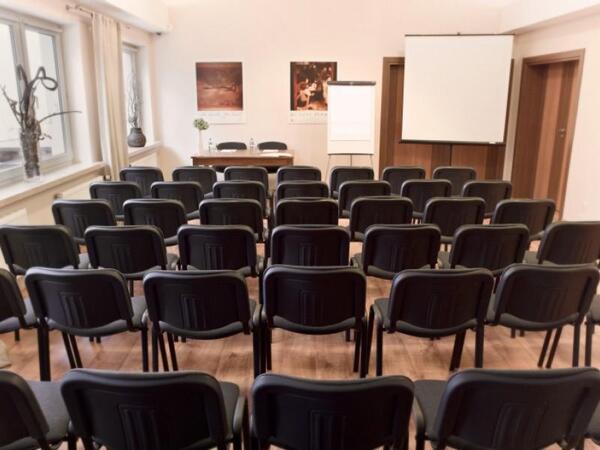
sale szkoleniowe NobleProg, ul. Gietkowska 6a, Olsztyn, poland, 10-170
Training and conference room with full audio-visual equipment. p>
Functional furniture provides the possibility of setting them in a conference layout, school, workshop & cinema, or cinema, depending on the client's needs. p>

This instructor-led, live training in warminsko-mazurskie (online or onsite) is aimed at beginner-level to intermediate-level participants who wish to understand the foundational principles of ICF coaching, including its core competencies and ethical guidelines, while gaining practical experience in applying coaching techniques.
By the end of this training, participants will be able to:
Understand the ICF Core Competencies and their application in coaching practice.
Demonstrate active listening, questioning, and goal-setting techniques.
Facilitate meaningful and transformative coaching conversations.
Adhere to the ICF Code of Ethics in professional coaching engagements.
Develop a personalized coaching style aligned with ICF principles.
Planning and Risk Assessment is a structured approach to identifying, evaluating, and mitigating potential risks in projects and operations.
This instructor-led, live training (online or onsite) is aimed at beginner-level to intermediate-level professionals who wish to plan effectively and manage risks in projects or operational environments.
By the end of this training, participants will be able to:
Understand the principles and processes of effective planning.
Identify and assess potential risks in various scenarios.
Develop and implement risk mitigation strategies.
Integrate risk assessment into the overall project lifecycle.
Format of the Course
Interactive lecture and discussion.
Group exercises and scenario-based practice.
Hands-on application using case studies.
Course Customization Options
To request a customized training for this course, please contact us to arrange.
This instructor-led, live training in warminsko-mazurskie (online or onsite) is aimed at intermediate-level finance and accounting professionals who wish to effectively manage, value, and audit fixed assets in compliance with accounting standards and regulations.
By the end of this training, participants will be able to:
Understand the life cycle and classification of fixed assets.
Apply local and international accounting standards in asset valuation and depreciation.
Manage fixed assets with proper controls, tools, and procedures.
Comply with legal and tax frameworks relevant to asset management and reporting.
This instructor-led, live training in warminsko-mazurskie (online or onsite) is aimed at intermediate-level to advanced-level finance and asset management professionals who wish to optimize asset tracking, control, and compliance with international financial reporting standards (IFRS).
By the end of this training, participants will be able to:
Classify and configure fixed assets according to IFRS regulations.
Manage asset creation, acquisition, and capitalization.
Implement control measures for asset tracking and monitoring.
Apply appropriate depreciation and amortization methods.
Process asset movements, transfers, and disposals effectively.
Ensure compliance with financial reporting and audit standards.
This instructor-led, live training (online or onsite) is aimed at intermediate-level safety professionals and operational managers who wish to enhance their ability to investigate incidents, identify systemic weaknesses, and design effective corrective and preventive actions.
Leadership for Directors and Board Members is a course designed to strengthen the leadership and governance capabilities of directors and board members.
This instructor-led, live training (online or onsite) is aimed at directors, executives, and board members who wish to develop effective leadership, governance, and decision-making skills at the board level.
By the end of this training, participants will be able to:
Understand the legal, ethical, and strategic responsibilities of directors and board members.
Apply principles of good governance to improve organizational performance.
Foster effective communication and collaboration in the boardroom.
Respond to crises and manage risks at the executive level.
Format of the Course
Interactive lecture and facilitated discussion.
Case studies and role-playing exercises.
Group activities and scenario-based analysis.
Course Customization Options
To request a customized training for this course, please contact us to arrange.
Leadership is the practice of guiding individuals and teams to achieve organizational goals while fostering trust, collaboration, and resilience. Effective leaders balance decision-making, people management, and communication skills with personal well-being.
This instructor-led, live training (online or onsite) is aimed at beginner-level to intermediate-level leaders, managers, and professionals who wish to strengthen their leadership competencies and apply them in organizational contexts.
By the end of this training, participants will be able to:
Build leadership practices based on trust and autonomy.
Understand people management fundamentals and the labor framework.
Apply strategic decision-making in complex scenarios.
Foster collaboration with a leadership perspective.
Use assertive communication in difficult conversations.
Practice self-management techniques and support leader well-being.
Format of the Course
Interactive lecture and discussion.
Case studies and group activities.
Practical exercises and role-playing scenarios.
Course Customization Options
To request a customized training for this course, please contact us to arrange.
This instructor-led, live training in warminsko-mazurskie (online or onsite) is aimed at intermediate-level internal auditors who wish to enhance their audit effectiveness by applying structured RCA techniques.
By the end of this training, participants will be able to:
Understand RCA methodologies and their role in internal auditing.
Identify and analyze the root causes of audit findings.
Apply RCA tools such as the 5 Whys, Fishbone Diagram, and Failure Mode and Effects Analysis (FMEA).
Develop corrective and preventive action plans based on RCA findings.
Integrate RCA into the internal audit process to improve risk management.
The Business Impact Analysis (BIA) is a structured methodology to identify and assess the criticality of organizational processes in the event of disruptions.
This consulting engagement is aimed at operational and administrative leaders who wish to map, analyze, and document business processes to strengthen continuity and resilience.
By the end of this engagement, the organization will be able to:
Identify critical processes across Finance, Supply Chain, and Quality areas.
Assess operational, financial, legal, and reputational impacts of disruptions.
Define recovery priorities (RTO and RPO) for critical processes.
Develop a process criticality matrix and recommendations for continuity planning.
Format of the Engagement
Kick-off and scoping sessions.
Workshops with process owners.
Real case analysis and data collection.
Group sessions to construct causal and impact diagrams.
Drafting and presentation of the BIA report.
Evaluation
Active participation in workshops and data collection (20%).
Contribution to impact analysis and scenario discussions (40%).
Validation and feedback on the draft BIA report (40%).
Engagement Customization Options
To request adjustments to the scope of this engagement, please contact us to arrange.
Kaizen is a structured approach to continuous improvement focused on small, incremental changes that eliminate waste, improve quality, and increase efficiency.
This instructor-led, live training (online or onsite) is aimed at beginner-level to intermediate-level professionals who wish to apply Kaizen principles across multiple departments to improve process discipline, communication, waste elimination, and staff engagement.
By the end of this training, participants will be able to:
Understand the foundational principles of Kaizen and its relationship with Lean.
Apply tools such as 5S, root cause analysis, and visual management to reduce inefficiencies.
Foster a culture of structured problem-solving and team-based improvements.
Implement Kaizen initiatives across key operational and support areas.
Format of the Course
Interactive lecture and discussion.
Lots of exercises and practice.
Hands-on implementation in a live-lab or workshop environment.
Course Customization Options
To request a customized training for this course, please contact us to arrange.
This instructor-led, live training in warminsko-mazurskie (online or onsite) is aimed at intermediate-level to advanced-level board members and directors who wish to enhance their leadership, governance, and decision-making skills.
By the end of this training, participants will be able to:
Understand the key responsibilities and legal duties of a director.
Develop effective governance structures and boardroom dynamics.
Enhance strategic decision-making and risk management capabilities.
Improve communication, leadership, and ethical decision-making at the board level.
This instructor-led, live training in warminsko-mazurskie (online or onsite) is aimed at organization leaders who wish to learn how to drive change within organizations by implementing effective change leadership strategies.
By the end of this training, participants will be able to:
Understand the effect of change leadership on individuals, teams, and organizations.
Apply planning practices to organizational change efforts.
Effectively drive organizational change through change leadership.
This instructor-led, live training in warminsko-mazurskie (online or onsite) is aimed at intermediate-level professionals who wish to develop a systematic approach to identifying, analyzing, and resolving problems using RCA methodologies.
By the end of this training, participants will be able to:
Understand essential concepts of RCA and continuous improvement cycles.
Apply different RCA tools to identify the root cause of problems.
Develop and implement effective problem-solving strategies.
Integrate RCA into organizational improvement and prevention efforts.
This instructor-led, live training in warminsko-mazurskie (online or onsite) is aimed at beginner-level / intermediate-level / advanced-level professionals who wish to attract top international candidates with minimal effort.
By the end of this training, participants will be able to:
Stress-free time management is an approach to life and work aimed at reducing stress through effective time management, prioritization, and emotional regulation. Creating schedules, prioritizing tasks, managing emotions, relaxation practices, breathing exercises, meditation, yoga, or walks can help reduce stress and improve well-being, enabling effective time management. It is essential to find a balance between work and rest and to apply techniques that best suit your lifestyle and work environment.
This instructor-led, live training in (online or onsite) is aimed at team leaders and middle managers who want to adopt AI safely and effectively by addressing the human factors that drive success: trust, accountability, decision habits, and psychological safety.
By the end of this training, participants will be able to:
Define when to use AI and when not to (stop rules).
Verify AI outputs with practical standards (red flags, second source).
This course is designed to help the attendee to build organizational resilience against a range of threats so that organizations can respond effectively to incidents, maintain the availability of business operations and safeguard its interests.
Format: Two-day workshops | 14 instructional hours
Target Audience: Team Leaders, Supervisors, Team Managers, Middle and Line Managers, individuals being prepared for leadership roles
This instructor-led, live training in Ottawa but can be delivered, it is aimed at managers and leaders who wish to strengthen their ability to lead difficult conversations with clarity, confidence, and accountability.
By the end of this training, participants will be able to:
This instructor-led, live training in warminsko-mazurskie (online or onsite) is aimed at current CTOs and upcoming CTOs such as technical directors or technical managers who wish to acquire the technical and managerial perspective needed to be an effective CTO.
By the end of this training, participants will be able to:
Hire and lead a vibrant and innovative technical team.
Effectively adopt and manage the technology needed to develop great products.
Apply useful techniques and strategies for managing products and projects.
Scale the company business and move it in the right direction.
In this instructor-led training, you will learn how to delegate strategically, set clear expectations, and cultivate trust within your team. Designed for mid-level managers, this course covers the barriers to delegation, practical handoff techniques, accountability structures, and trust-building practices.
The training "Personal Effectiveness - Self-Management" is aimed at individuals who wish to increase their effectiveness in professional work, including team leaders, project managers, and other professionals. The course aims to develop skills in influencing others, improving interpersonal relationships, enhancing leadership effectiveness, and achieving personal satisfaction through better professional relationships. The training is based on three pillars of interpersonal influence: building communication strategies, self-awareness for better understanding of others, and developing open and fluid communication. The format of the sessions is workshop-based, allowing for practical application of the acquired knowledge.
Effective interpersonal communication is a key skill in both personal and professional relationships.
It involves focusing on the speaker and understanding their perspective, expressing interest in what they say,
using clear and simple messages to avoid misunderstandings, understanding and appreciating others' feelings, needs, and viewpoints. Effective communication means expressing your thoughts and emotions responsibly without violating others' boundaries,
with an awareness of cultural differences that help avoid misunderstandings arising from intercultural communication.
Effective interpersonal communication is essential for building lasting relationships, resolving problems, teamwork, and achieving success both in professional and personal life. It is a skill worth continuously developing and refining.
To ensure that an individual has the core understanding of GRC processes and capabilities, and the skills to integrate governance, performance management, risk management, internal control, and compliance activities.
Across the globe regulators are increasingly linking the amount of risk taken by a bank to the amount of capital it is required to hold and banks and financial services are increasingly being managed on risk-based management practices. The banks, their products, the regulations and the global market are becoming increasingly complex, driving ever greater challenges in effective risk management. A key lesson of the banking crisis of the last five years is that risks are highly integrated and to manage them efficiently banks have to understand these interactions.
Key features include:
the explanation of the current risk-based regulations
detailed review of the major risks faced by banks
industry best practices for adopting an enterprise approach to integrating risk management across an entire organisation
using governance techniques to build a group wide culture to ensure everyone takes an active role in managing risks in line with the banks strategic objectives
what challenges could be faced by risk managers in the future.
The course will make extensive use of case studies designed to explore, examine and reinforce the concepts and ideas covered over the five days. Historical events at banks will be used throughout the course to highlight how they have failed to manage their risks and actions that could have been taken to prevent loss.
Objectives
The objective of this course is to help bank management deliver an appropriate integrated strategy for managing the complex and changing risks and regulations in today’s international banking environment. Specifically this course aims to give senior level management an understanding of:
major risk within the financial industry and the major international risk regulations
how to manage a bank’s assets and liabilities whilst maximising return
the interaction between risk types and how banks use an integrated approach for their management
corporate governance and the best practice approaches to managing the diverse interests of the stakeholders
how to develop a culture of risk governance as a tool for minimising unnecessary risk taking
Who should attend this seminar
This course is intended those who are new to integrated risk management, senior management responsible strategic risk management, or those who wish to further their understanding of enterprise risk management. It will be of use to:
Board level bank management
Senior managers
Senior risk managers and analysts
Senior directors and risk managers responsible for strategic risk management
Internal auditors
Regulatory and compliance personnel
Treasury professionals
Asset and liability managers and analysts
Regulators and supervisory professionals
Suppliers and consultants to banks and the risk management industry
Corporate governance and risk governance managers.
ISO 22301 Introduction training course enables you to comprehend the basic concepts of a Business Continuity Management System (BCMS).
By attending the ISO 22301 Introduction course, you will understand the importance of a Business Continuity Management System and the benefits that businesses, society and governments can obtain.
Who should attend?
Individuals interested in Business Continuity Management
Individuals seeking to gain knowledge about the main processes of a Business Continuity Management System (BCMS)
Learning objectives
Understand the concepts, approaches, methods, and techniques used to implement a Business Continuity Management System
Understand the basic elements of a Business Continuity Management System
After attending the training course, you can sit the exam and, if you successfully pass the exam, you can apply for the “Certified ISO 22301 Lead Implementer” credential. The internationally recognized “Certified ISO 22301 Lead Implementer” certificate will prove that you have the professional capabilities and practical knowledge to implement a BCMS based on the requirements of ISO 22301 in an organization.
Who should attend?
Project managers and consultants involved in business continuity
Expert advisors seeking to master the implementation of the business continuity management system
Individuals responsible to maintain conformity with BCMS requirements within an organization
Members of the BCMS team
Learning objectives
Gain a comprehensive understanding of the concepts, approaches, methods, and techniques used for the implementation and effective management of a BCMS
Learn how to interpret and implement the requirements of ISO 22301 in the specific context of an organization
Understand the operation of the business continuity management system and its processes based on ISO 22301
Acquire the necessary knowledge to support an organization in effectively planning, implementing, managing, monitoring, and continually improving a BCMS
Educational approach
This training course is based on theory, implementation best practices, and ISO 22301 requirements useful for the implementation of a BCMS.
Lecture sessions are illustrated with practical exercises based on a case study which includes role-playing and discussions.
The participants are encouraged to intercommunicate and engage in discussions and exercises.
The exercises are similar to the certification exam.
General Information
Certification fees are included in the exam price. After completion of the course you will be able to book the exam.
Participants will be provided with the training material containing over 450 pages of explanatory information and practical examples.
An Attendance Record worth 31 CPD (Continuing Professional Development) credits will be issued to participants who have attended the training course.
In case candidates fail the exam, they can retake the exam within 12 months following the initial exam for free.
Training course is focused on the information security risk management process introduced by ISO/IEC 27005 and the structure of the standard.
The course provides an overview of the guidelines of ISO/IEC 27005 for managing information security risks, including context establishment, risk assessment, risk treatment, communication and consultation, recording and reporting, and monitoring and review.
After attending the training course, you can enroll for the Foundation Exam and, if you successfully pass it, you can apply for a “PECB Certificate Holder in ISO/IEC 27005 Foundation” certificate.
Foundation Exam ( extra cost): Duration: 1 hour, Questions: 40, Where: Online
A PECB Foundation certificate shows that you have knowledge on the fundamental concepts, principles, methodologies, processes, and management approaches used in information security risk management.
Kaizen methodology reshapes how organizations approach daily operations through systematic continuous improvement. This training examines proven total quality control methods, East-West management contrasts, problem-solving techniques, and labor relations strategies while exploring frameworks for transforming corporate culture and supplier partnerships. Participants leave equipped to identify inefficiencies, design lean workflows, and cultivate a culture of ongoing optimization.
The "Communication in a Project Team" training is aimed at project teams looking to develop their communication skills to a masterful level. The training focuses on providing communication tools, the IPS (Innovative Problem Solving) model, conflict management, and shaping non-antagonistic communication rules. Participants will acquire the skills to convey information tailored to the type of interlocutor, provide constructive feedback, and foster effective team collaboration.
The training "Leadership and Team Management II" is designed for individuals involved in managing teams. The course aims to develop leadership skills, understand one's own leadership style, adopt the right approach to management in different situations, learn task assignment within a team and effective delegation, as well as analyze team dynamics and effectively motivate employees. The training covers topics such as supervisory style, team building, motivating individuals and teams, organizing work, and delegating tasks.
Anyone in the organization who wants to improve their competencies, (attitude, knowledge, skills) in the area of leadership and management psychology.
Managers who want to improve their competencies in leadership and management.
Entrepreneurs
EDUCATIONAL PURPOSE OF THE TRAINING:
Training, in the form of practical work workshops, aimed at training to improve skills in the area of management and leadership. The training will prepare you to manage human capital. Trainees will acquire skills in the areas of: a. management, leadership and inspiring others to action; b. motivating, building commitment, increase determination and morale; c. evaluating and developing employees; d. delegating tasks and authority; e. organizing and planning work and setting goals; f. enforcing and giving feedback.
OBJECTIVES OF ATTENDING THE TRAINING:
You will learn modern models and tools from the field of leadership and management. You will raise to a higher level, key interpersonal skills in the areas of leading people and teams and situational management.
BENEFITS OF ATTENDING THE TRAINING:
You will practice the models, tools and techniques you learned, increasing your level of skills that have the greatest impact on leading people and managing a team.
THE TRAINING WILL STRENGTHEN YOUR KNOWLEDGE: From the area of leadership and management psychology.
THE TRAINING WILL STRENGTHEN SKILLS IN THE AREA OF:
Selecting models, tools and techniques appropriate to the situational context
Leading people and managing teams.
Increasing your influence to change the actions and behaviors of your team.
The ability to build high commitment and morale in teams.
The ability to select rational and emotional arguments that increase our influence on the decision-making process of others.
The ability to diagnose the needs of others.
The ability to neutralize resistance to change.
The ability to manage emotions and stress.
TRAINING WILL STRENGTHEN COMPETENCIES:
Exerting influence, in the process of management and leadership.
Reading the context of a situation and selecting the right models, tools and techniques of situational leadership.
Managing yourself and teams in a volatile and unpredictable environment.
The "Manager as a Change Leader" training is aimed at managers from various sectors, especially those managing change processes in companies undergoing restructuring, mergers, or acquisitions. The course aims to develop managerial skills for effective change management, including defining the profile of a change leader, understanding the goals of change, engaging employees, creating networks of allies, and achieving success at different stages of the change process. The training is conducted in a workshop format and covers topics such as styles of change leadership, strategies for change, creating a coherent vision of the future, and organizing networks of allies.
Managers and Team Leaders who need to be fully aware of the issues surrounding the management and development of their staff (direct and indirect reports)
Format of the course
The course will be a highly-interactive combination of:
Facilitated Discussions
Slide Presentations
Exercises and Case Studies
By the end of the course, delegates will be able to:
Understand the different skills required for Managing and for Leading
Develop their team in the most-effective way
Explain how best to deliver Change in their part of the organisation
Manage staff performance better
Successfully negotiate their preferred solutions
Explain how to deal with the difficult situations they may encounter in the office
This instructor-led, live training in warminsko-mazurskie (online or onsite) is aimed at managers and executives who wish to implement the right tools, skills, and methodologies to manage remote teams.
By the end of this training, participants will be able to:
Explore remote leadership, structures, and components to successfully adapt a remote work setup.
Develop trust, goals, culture, and teamwork to create an effective and productive remote team.
Use existing tools and technologies to improve virtual communication and collaboration.
Implement goal setting and project management methods to measure the performance of a remote team.
The ultimate goal of this program is to transform the audit process from a reactive "finding" exercise into a proactive "prevention" strategy. By mastering Root Cause Analysis, Internal Audit team will specifically target the elimination of recurrent findings. This ensures that once a weakness is identified, the recommendation provides a permanent fix, safeguarding company's operational efficiency and financial integrity.
Choosing not to implement structured RCA creates a high-risk environment:
Financial Erosion: Unresolved root causes in financial processes lead to cumulative leakages that grow over time.
Resource Wastage: Auditors spend 40% more time re-auditing the same failed controls instead of focusing on new strategic risks.
Diminished Authority: Repeatedly reporting the same issues weakens the Audit Division's influence with senior management and auditees.
The training allows you to learn in practice aspects of risk management in projects. As part of the training participants learn about international standards-based procedures, techniques and tools used in many organizations that allow them to plan the management of challenges in projects, classify them and prepare to consciously manage situations with low predictability and crisis situations. The training is dedicated to those interested in developing competence in risk management - one of the main elements of conscious management of Project Managers, Scrum Masters. The training consists of a substantive part, workshops, practical examples.
The "Managing a Distributed Team" training is aimed at individuals at various organizational levels working remotely, especially those working from home. The course aims to equip participants with the skills to build an effective distributed team, define roles, delegate tasks effectively, analyze team dynamics, and harmoniously utilize the potential of the team. In a workshop format, strategies for managing a distributed team are discussed, including focused project management, utilization of IT tools, maintaining interpersonal relationships, motivational techniques, time management, and effective task delegation.
This 5-day course will help delegates develop their strategic thinking, planning and management skills, including the tactical and operational requirements for successful implementation in a high-stakes environment. The course will deal with the tough issues of conflict management, managing change, what makes a good leader and how to motivate a team. Using interactive case studies as well as sector examples, delegates will be encouraged to share experiences and challenges to help build practical and work focused solutions which they can take back and actually use.
The core objective of the programme is to equip executives with the skills to scan the business environment to uncover profitable business opportunities as well as develop strategies for gaining competitive advantage in an increasingly competitive business environment. Amongst others, the programme will also provide insight on leadership the best practices and behaviors that will strengthen the capacity of executives to handle the complexities and uncertainties of managing a high performance organisation.
Learning Objectives
After attending this course, delegates will be able to:
Describe the main problems that are faced by an organisation;
Explain the various approaches to organisational development planning;
Analyse the current business environment and influences affecting the organisation;
Analyse resources within and external to the organisation;
Explain the various approaches to managing strategy and it place in the business plan;
Evaluate the alternative development strategies so as to recommend the one(s) most suited to the needs of the firm.
Apply a deeper understanding of strategic development plans;
Discuss objectively the risks, benefits and costs that accompany the implementation of the new strategy including managing conflict in a team;
Define approaches to managing the identified risks;
Analyse the potential impacts on his or her firm (both positive and negative) that will result from implementing the new strategy;
Design policies, systems and processes to successfully implement the emergent strategic plans;
Cover the key steps in change management
Who Should Attend
Product/Service Managers
Newly appointed as well as established Managers and Team Leaders
Heads of Operations
Senior Bank Managers
Human Resource Managers
Operations Managers
Marketing Managers
Methodology
The course consists of facilitated workshops, supplemented by case studies drawn from a combination of published real life examples and/or practical experience. There will also be opportunities for attendees to work in small groups to synthesise ideas and strategies and to apply the material in the context of their own organisations/departments. Open forum discussions will also be a key element.
This instructor-led, live training in warminsko-mazurskie (online or onsite) is aimed at beginner-level / intermediate-level / advanced-level addresses the difficulty of transforming passive or resistant observers into active, supportive partners through systematic analysis and psychological insight.
In complex business environments, the success of a project rarely depends on technical execution alone; it hinges on the support of the people involved. The primary challenge in Stakeholder Management is navigating the "web of influence"—understanding that different parties have competing priorities, varying levels of power, and subjective definitions of success. Without proactive management, projects often face "hidden blockers," sudden shifts in support, or communication breakdowns.
By the end of this training, participants will be able to:
This course has been created for decision makers whose primary goal is not to do the calculation and the analysis, but to understand them and be able to choose what kind of statistical methods are relevant in strategic planning of the organization.
For example, a prospect participant needs to make decision how many samples needs to be collected before they can make the decision whether the product is going to be launched or not.
If you need longer course which covers the very basics of statistical thinking have a look at 5 day "Statistics for Managers" training.
In this instructor-led, live training in warminsko-mazurskie, we walk new managers through the most important concepts of strategic thinking, putting theory into practice through task-based activities based on real-life cases. Participants get a unique opportunity to learn new ways of thinking, implement key concepts to solve problems, reflect on how these principles apply to their own work, and listen to and share their own perspectives with their instructor and class peers.
This training course has been created for investors, business owners, directors, managers, executives and analysts who need to develop strategic planning skills. It is not designed for academic purposes, but to start realizing your dreams today.
This course focuses on strategic planning for businesses in which flexibility and constant learning is the most important thing. The main emphasis is corporate and investment strategy using current real-world examples. Each course member will have the opportunity to create a strategic plan and learn how to implement it in practice.
The training 'Generational Differences in Management. Employees of Generations XYZ. How to Function with Them' is aimed at team leaders, offering knowledge and skills in communication and motivation of employees from generations X, Y, and Z. Based on an interactive methodology, the course emphasizes practical exercises and mini-lectures, enabling effective acquisition of the skills necessary for managing a team in a generationally diverse environment.
The training focuses on developing time management and personal effectiveness skills. Participants will acquire practical skills in prioritizing tasks, setting priorities, planning, and organizing work. The course also covers workload control, effective use of time management tools, working under pressure, and identifying and eliminating factors that disrupt work. The training topics include self-diagnosis, motivation, goals, task hierarchy, planning, organization, efficient time utilization, and time management in the context of habits.
To acquire skills in managing external and internal communication of an organization during crisis situations, as well as to learn how to create procedures for such situations.
The goal of the training is to prepare participants to develop time management, priority setting, task management, and workload balancing skills in IT and HR teams using digital technologies, with an emphasis on remote and hybrid work models. Participants will gain knowledge on how to effectively use ICT tools and support the implementation of HR policies in the context of modern work models.
The "Change Management - Managers and Leaders" training is aimed at managers leading teams at different levels of organizations, project leaders, and task force leaders involved in change processes. The course aims to prepare managerial staff for effectively managing people during the change process, obtaining approval for the change project, creating dynamic actions related to the project, predicting and minimizing sources of conflict, and engaging all participants. The training covers three phases of organizational transformation, diagnosing the project, building a constructive attitude, effective communication in the context of change, and optimizing methods for working with people.
This instructor-led, live training in warminsko-mazurskie (online or onsite) is aimed at managers, supervisors, and technical professionals transitioning into leadership roles who wish to use structured leadership frameworks and communication tools to strengthen authority, delegation, and team performance in growing organizations.
By the end of this training, participants will be able to:
Define and apply clear leadership authority and accountability within their scope.
Delegate tasks and outcomes effectively while maintaining performance oversight.
Conduct structured, direct, and constructive performance conversations.
Communicate expectations clearly to improve engagement and cross-functional alignment.
Read more...
Last Updated:
Testimonials (6)
Open discussions with people fromdifferent companies.
Kalin Petrov - DPM Metals
Course - Change Management - Leading the change
That it was very interactive.
Roxana Sucan
Course - Change Management - Dealing with change
The exercises were great — they helped me get back “on the field.”
Lilia Boico - PUBLIC
Course - AML/CTF Governance and Risk Oversight Training
I especially appreciated the instructor’s ability to give thorough, well-explained answers to questions specific to my personal situation.
HASAN TAHA URLU - Huber Turkiye
Course - Assertiveness
trainer knowledge
SUNEEL jee - House of Spices India
Course - Six Sigma LEAN Yellow Belt
interaction and discussion with each other in different groups, together with some games.
- Netherlands Business Support Office (NBSO) Indonesia
Online Management training in warminsko-mazurskie, Management training courses in warminsko-mazurskie, Weekend Management courses in warminsko-mazurskie, Evening Management training in warminsko-mazurskie, Management instructor-led in warminsko-mazurskie, Evening Management courses in warminsko-mazurskie, Management trainer in warminsko-mazurskie, Management instructor-led in warminsko-mazurskie, Management on-site in warminsko-mazurskie, Management private courses in warminsko-mazurskie, Management boot camp in warminsko-mazurskie, Weekend Management training in warminsko-mazurskie, Online Management training in warminsko-mazurskie, Management instructor in warminsko-mazurskie, Management one on one training in warminsko-mazurskie, Management classes in warminsko-mazurskie, Management coaching in warminsko-mazurskie