
Online or onsite, instructor-led live BPM (Business Process Management) training courses demonstrate through hands-on practice how to understand, plan and implement BPM within an organization. Our BPM courses include theory, case study discussions and practical application of the concepts learned in a live lab environment, all aimed at helping participants increase the operational efficiency of their organizations.
BPM training is available as "online live training" or "onsite live training". Online live training (aka "remote live training") is carried out by way of an interactive, remote desktop. Onsite live BPM trainings in Rzeszow can be carried out locally on customer premises or in NobleProg corporate training centers.
NobleProg -- Your Local Training Provider
Rzeszów
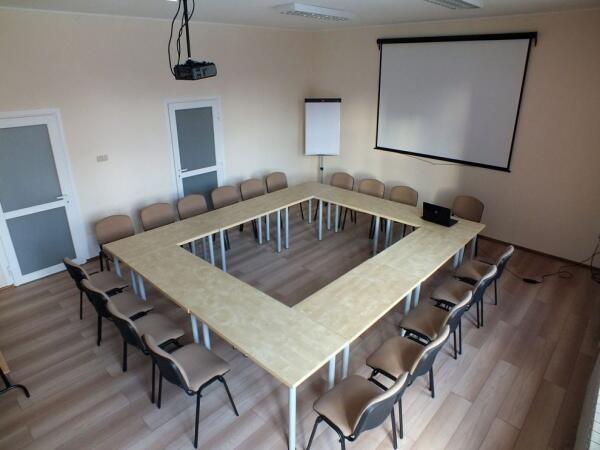
RISE, Plac Wolności 13, Rzeszów, Poland, 35-073
The training room is located in the very heart of Rzeszow, making it easily accessible for participants. In the immediate vicinity, there are major public transportation hubs, such as city buses (MPK), railways (PKP), and long-distance buses (PKS), facilitating access from various parts of the city and beyond. Additionally, there is an underground parking garage at the Center Park gallery nearby, providing convenient parking for those using their own vehicles.

This instructor-led, live training in Rzeszow (online or onsite) is aimed at advanced-level participants who wish to integrate Drools 8 with jBPM to design, execute, and optimize business workflows and processes.
By the end of this training, participants will be able to:
Set up Drools 8 and jBPM environments for development.
Define and manage complex business rules in Drools 8.
Design and execute workflows using jBPM.
Integrate Drools rules into jBPM processes for dynamic decision-making.
This instructor-led, live training in Rzeszow (online or onsite) is aimed at beginner-level to intermediate-level business analysts who wish to use DSLs in Drools 8 to define, manage, and optimize business rules without relying heavily on technical programming skills.
By the end of this training, participants will be able to:
Understand the core concepts of Drools 8 and its architecture.
Create DSLs to simplify business rule definitions for non-technical users.
Manage, test, and maintain rules effectively using Drools Workbench.
Collaborate with technical teams to implement and refine business rules.
Apply best practices for rule optimization and lifecycle management.
This instructor-led, live training in Rzeszow (online or onsite) is aimed at advanced-level participants who wish to optimize rule execution, integrate Drools with enterprise systems, and leverage advanced features like decision tables and domain-specific languages (DSLs).
By the end of this training, participants will be able to:
Optimize the performance of complex rule execution.
Utilize advanced Drools features such as decision tables, DSLs, and rule templates.
Integrate Drools seamlessly with enterprise applications and external systems.
Implement robust version control and collaboration mechanisms for rule development.
Design and deploy scalable Drools-based solutions for enterprise needs.
This instructor-led, live training in Rzeszow (online or onsite) is aimed at intermediate-level participants who wish to build and manage complex business rules, optimize rule execution, and handle rule dependencies effectively using Drools 8.
By the end of this training, participants will be able to:
Create advanced business rules and manage their dependencies.
Implement decision-making logic using Drools rule groups and agendas.
Optimize the performance of rule execution in Drools.
Use advanced Drools Workbench features for rule management.
Integrate Drools with external data sources and systems.
Modeling and Documentation for Business Analysis is a practical course focused on standard modeling languages and tools used to capture, visualize, and validate business requirements and processes.
This instructor-led, live training (online or onsite) is aimed at professionals with limited or no experience in modeling who wish to apply industry-standard techniques like UML, BPMN, and wireframing tools to improve clarity and communication in business analysis projects.
By the end of this training, participants will be able to:
Use UML diagrams to represent functional requirements and system behavior.
Model business processes using BPMN standards.
Create clear and structured use case diagrams and documentation.
Design wireframes and interactive prototypes using Figma and Balsamiq.
Format of the Course
Interactive lecture and discussion.
Hands-on use of modeling tools in sample project scenarios.
Guided exercises focused on process, requirements, and UI modeling.
Course Customization Options
To request a customized training for this course based on your organization’s standards or preferred toolset, please contact us to arrange.
This instructor-led, live training in Rzeszow (online or onsite) is aimed at all-level project managers who wish to gain Green Belt certification knowledge in BPMN to streamline project workflows, improve process efficiency, and ensure compliance with business standards.
By the end of this training, participants will be able to:
Understand the core concepts and components of BPMN 2.0.
Create and interpret BPMN diagrams to represent business processes.
Optimize workflows using best practices in BPMN modeling.
Identify and eliminate inefficiencies in business processes.
Integrate BPMN into project management and process improvement initiatives.
This instructor-led, live training in Rzeszow (online or onsite) is aimed at beginner-level business analysts who wish to gain practical knowledge of Celonis for process mining, optimization, and automation, empowering them to unlock efficiencies and enhance business performance.
By the end of this training, participants will be able to:
Understand the fundamentals of process mining and how to use Celonis effectively.
Integrate data sources, discover, and visualize processes.
Gain expertise in analyzing processes using KPIs and benchmarks.
Automate workflows and leverage Celonis Action Engine for task automation.
Build and customize dashboards and reports for real-time monitoring.
This instructor-led, live training in Rzeszow (online or onsite) is aimed at beginner-level participants who wish to learn the basics of Drools 8, set it up, and create simple business rules for better decision-making and automation.
By the end of this training, participants will be able to:
Understand the purpose and benefits of using Drools 8.
Set up the Drools environment and integrate it with applications.
Create, test, and deploy simple business rules.
Use Drools Workbench for rule management and decision tables.
Implement Drools in real-world scenarios to automate decisions.
"Camunda for Developers" is an intensive training course that focuses on the practical application of BPMN and DMN notation in the Camunda engine. Participants will gain deep knowledge about process life cycles, integration with SpringBoot, engine configuration, and error handling. The training includes practical exercises and covers best practices in modeling and managing the Camunda engine.
This course has been created for business analysts who want to use BPMN 2.0 extensively in their projects.
It focuses on practical aspects of all BPMN 2.0 specification as well as implementations of common patterns.
It is a series of short lectures followed by exercises: the delegates will have a problem described in English, and will have to create a proper diagram for each problem. After that, the diagrams will be discussed and assessed by the group and the trainer.
This course doesn't cover execution part of BPMN, it focuses on analysis and process design aspects of BPMN 2.0.
The EZD RP (Electronic Document Management of the Republic of Poland) system plays a crucial role as the foundation for effective, transparent, and compliant document management in public administration. By centralizing and digitizing document workflow processes, the system increases transparency, improves citizen service quality, and significantly reduces time and cost in the operation of government offices. A key component of the system is the leading open-source process engine Camunda, which enables business process modeling and automation, significantly enhancing the efficiency of EZD RP operations. Training on using Camunda is essential for individuals implementing EZD RP to effectively design, implement, and manage processes within the system.
The EZD RP (Electronic Document Management System of the Republic of Poland) plays a crucial role as the foundation for effective, transparent, and compliant document management in public administration. By centralizing and digitizing document workflow processes, the system increases transparency, improves citizen service quality, and significantly reduces time and costs in the operation of government offices. A key component of the system is the leading open-source process engine Camunda, which enables business process modeling and automation, significantly enhancing the efficiency of EZD RP operations. Training on using Camunda is essential for individuals implementing EZD RP to effectively design, implement, and manage processes within the system.
It is a course that positions itself in the midst of administration and Information Technology, incorporating tools and techniques for designing, implementing, controlling and analyzing Operational Business Processes - This usually involves individuals, organizations and software applications.
This course contains practical assignments, participants will be introduced to topics during theory classes and these will be accompanied by practical exercises.
What will you learn?
1. The Basics of BPM
2. BPM Implementation Strategies
3. Process modeling, analysis and design
4. Governance and business strategies
5. Modeling a process with BPMN
6. Business rules
Business Process Model and Notation (BPMN), Decision Model and Notation (DMN) and Case Management Model and Notation (CMMN) are three Object Management Group (OMG) standards for processes, decisions, and case modelling. This course provides an introduction to all of them and informs when should we use which.
This instructor-led, live training in Rzeszow (online or onsite) is aimed at beginner-level / intermediate-level / advanced-level individuals who wish to use to develop skills in business and process modeling for a better understanding of the organization, products, and dependencies between processes, data, and stakeholders.
By the end of this training, participants will be able to:
Understand the role of models as key communication tools in business analysis.
Be able to select the right modeling method (BPMN, UML, SIPOC, Business Model Canvas) for a specific business goal.
Know how to decompose complex business processes into clear diagrams.
Identify touchpoints between processes, data, and system actors.
Be able to assess the correctness and effectiveness of created business models.
The training "Camunda for Analysts" is dedicated to individuals who wish to delve into the secrets of BPMN and DMN process modeling in the Camunda environment, as well as learn methods for analyzing and optimizing business processes. During the training, participants will cover: ⦿ BPMN and DMN notation and their application in process modeling ⦿ How process engines work and to which problems BPMN is an effective tool ⦿ Process versioning, change management, and switching between versions ⦿ Camunda Cockpit and its use in analyzing production errors, working with tokens, and process variables ⦿ The process lifecycle in the Camunda engine and methods for verifying it ⦿ Interpretation of BPMN and DMN notation by the Camunda engine and issues related to data schema and incidents ⦿ Approaches to communication between Camunda and external systems (e.g., RabbitMQ, external tasks) ⦿ Methods for diagnosing problems in processes and optimizing them, including antipatterns. The training combines theory with practical exercises, where participants model processes on individual environments under the trainer's supervision. The course is aimed at business analysts and individuals responsible for process modeling and optimization in the Camunda system, as well as those who want to learn tools that support process development and monitoring.
The "Camunda for Developers (EZD RP)" training is a comprehensive course for programmers who want to learn about modeling, implementing, and integrating business processes in EZD RP using Camunda. During the training, participants will learn: ✅ Notation BPMN and DMN – overview of key elements and their interpretation by the Camunda engine ✅ Camunda process engine – applications, integration with EZD RP, and best practices ✅ Camunda Modeler – process modeling, advanced features, and integration with Spring Boot ✅ Camunda API and messaging – different types of messages and their correlation in processes ✅ Process data management – data model, serialization, and variable scope ✅ Error handling and debugging – incident analysis, transactionality, and process testing ✅ Camunda Cockpit – monitoring, error analysis, and token management ✅ Process versioning – strategies for switching between versions and their impact on EZD RP ✅ Implementing an application handling process in EZD RP – practical configuration and implementation ✅ Configuring Camunda in EZD RP – embedded vs standalone, optimization for large scale ✅ Reporting and managing historical data – Custom History Backend and History API The training combines theory with practice, allowing participants to prepare and deploy a real process in EZD RP. Through workshops on individual environments, participants will learn to debug, monitor, and optimize processes in a distributed environment.
The training "Camunda in EZD RP – Modeling and Running BPMN Processes" is a comprehensive course that introduces participants to the world of business process modeling in the EZD RP system, using BPMN and DMN standards and the Camunda process engine. Over three intensive days, participants will gain theoretical knowledge and practical skills in: ✓ Modeling processes according to BPMN and DMN standards ✓ Installing and configuring the EZDRP-BPMN module ✓ Running and monitoring processes in EZD RP ✓ Managing data, errors, and process analysis in Camunda Cockpit ✓ Best practices and optimization of production deployments The training combines theory with numerous practical workshops, enabling participants to independently model, run, and test processes in the EZD RP environment. It is aimed at individuals who want to effectively use BPMN in their daily work, system administrators, and teams implementing process solutions within organizations.
This instructor-led, live training in Rzeszow (online or onsite) is aimed at intermediate-level system administrators and developers who wish to configure, manage, and deploy Java applications on the JBoss platform.
By the end of this training, participants will be able to:
Install and configure JBoss Application Server and its core components.
Customize JBoss AS services for monitoring, database connections, and transaction management.
Develop and deploy EJB 3 session beans and web applications.
Utilize the JBoss Messaging Service to deploy and manage JMS applications.
Manage JBoss AS through the Java Management Extension and Administration Console.
Implement JBoss Drools for business rules management and utilize the Guvnor tool for rule development and testing.
NobleProg has official OMG OCEB 2 Content Developer status, which means that our course outlines and training materials were developed by the same experts who prepared questions for OCEB 2 exams.
This course prepares you for the OMG Certified Expert in BPM (OCEB v2) Fundamental Examination.
After this course you can practise using our testing engine on over 200 sample questions.
The training has been designed for individuals who want to effectively work with data using Python, leveraging libraries such as Pandas, NumPy, and tools for integration with Excel. Participants will learn both the basics of data manipulation and advanced techniques for code optimization, processing large datasets, and creating compelling reports and visualizations.
Throughout the course, participants will step-by-step learn:
how to import, process, and analyze data using Pandas and NumPy, optimize Python code performance, automate report and chart generation in Excel, and integrate various data sources into a cohesive analytical process.
The EZD RP (Electronic Document Management of the Republic of Poland) system plays a crucial role as the foundation for effective, transparent, and compliant document management in public administration. By centralizing and digitizing document workflow processes, the system increases transparency, improves citizen service quality, and ensures significant time and cost savings in the operation of government offices. A key component of the system is the leading open-source process engine Camunda, which enables business process modeling and automation, significantly enhancing the efficiency of EZD RP operations. Training on using Camunda is essential for individuals implementing EZD RP to effectively design, implement, and manage processes within the system.
This training allows participants to gradually enter the world of programming in the Python language. The course covers the most important elements of the language—from basic syntax and working with the environment, through data operations and program flow control, up to functions, modules, and the first elements of object-oriented programming.
Participants will become familiar with key constructs used in daily programming work, learn algorithmic thinking, and organize code in a transparent and consistent manner according to best practices. During the training, significant emphasis is placed on writing high-quality code and error analysis.
Upon completion of the training, participants will be able to independently write simple scripts, create functions and classes, organize projects into files, as well as understand, analyze, and run Python code in practical applications.
The training focuses on building a Retrieval Augmented Generation (RAG) system, which combines the capabilities of large language models with information retrieval from local documents. Participants will learn how to create applications that answer questions based on their own data, eliminating the problem of hallucinations and knowledge limitations in LLMs.
The program guides participants through all key stages of creating a RAG system. They will become familiar with communication principles using the OpenAI API and the LangChain framework, which facilitates working with language models. Participants will learn how to process documents in various formats, divide them into optimal segments, and transform them into vector representations. They will also get to know the Qdrant database and mechanisms for semantic search based on embedding similarity.
We place special emphasis on the quality of system performance—participants will implement result reranking techniques and learn how to quantify retrieval effectiveness and generated responses using the DeepEval library. The program also covers practical aspects of prompt engineering and methods for avoiding typical pitfalls when working with LLMs.
The outcome of the training will be a functional web application built in Streamlit, which allows users to ask questions about their own document base. Upon completing the course, participants will be able to independently design and implement a RAG system tailored to their specific business needs.
This instructor-led, live training in Rzeszow (online or onsite) is aimed at beginner-level to intermediate-level professionals who wish to learn how to manage and optimize business processes using Signavio.
By the end of this training, participants will be able to:
Use drag-and-drop to create consistent, readable models that map an organization’s operations.
Collaboratively document, optimize, and simulate business processes.
This instructor-led, live training in Rzeszow (online or onsite) is aimed at process department personnel and operations team members who wish to master practical process improvement techniques using Six Sigma principles and BPMN 2.0 modeling.
This training focuses on practical use of the Streamlit library to create interactive web applications and analytical dashboards in Python. Participants will learn to build functional user interfaces without needing knowledge of HTML, CSS, or JavaScript.
The program covers all key components of Streamlit – from basic text elements and layout to interactive input widgets, advanced features such as forms, charts, and file handling. Participants will understand session state management, result caching, and database integration, enabling them to create efficient production applications.
We emphasize practical application – each theoretical module is supplemented with exercises, and the training concludes with the creation of a complete project or two, depending on time availability.
Upon completing the training, participants will be able to design Streamlit applications independently – from simple dashboards to advanced analytical tools. They will gain skills for rapid prototyping of data science solutions and creating interfaces for machine learning models.
Managers who want to understand BPMN diagrams, Business Consultants, Business Analysts, Business Process Engineers, System Analysts and anyone who is involved in analyzing and planning Business Processes using standardized, unified modelling notation.
Course Goals:
Produce high-quality process diagrams
Model in the BPMN process notation
Capture as-is process information
Implement optimized process flows for people-intensive processes
Simplify complex process definitions and break them into more manageable pieces
The course aims at teaching the practical knowledge of BPMN modeling and learning basic skills.
The ideal student is a person who analyzes and documents the processes as a model, which is a business user IT system or business analyst collaborating with business people within a certain organizational function.
The training is conducted by a moderated discussion (40%) and computer workshop (60%). Part of the laboratory is to translate business situations described BPMN diagram
The course is a very intensive practical course in the strict sense, the training does not deal with in any way, the theoretical considerations of BPMN.
Read more...
Last Updated:
Testimonials (8)
The most think i like about training was professional way to share the knowledge from trainer.
Mateusz Jezowicz vel Jezewski - Viessmann
Course - Signavio Process Manager
What I like the most about the training was the detailed discussion and the Exercises.
Kevin Roi Rimpos - Century Pacific Food Inc.
Course - Business Process Re-engineering for Competitive Advantage
The trainer shared his knowledge and led great atmosphere.
Agnieszka Dubanska - Narodowy Fundusz Zdrowia
Course - Modelowanie procesów biznesowych z wykorzystaniem UML i BPMN
Demonstrating processes on real, production examples.
Arkadiusz - VSoft S.A.
Course - Camunda dla deweloperów
Machine Translated
Advancing trainers.
Piotr - Asseco Poland S.A
Course - Camunda dla analityków
Machine Translated
- trainer's knowledge
- trainers laid-back style
Maciej - EY GLOBAL SERVICES (POLAND) SP Z O O
Course - OCEB2 OMG Certified Expert in BPM - BPM 2 Fundamental Exam Preparation
Online Business Process Management (BPM) training in Rzeszow, BPM training courses in Rzeszow, Weekend Business Process Management courses in Rzeszow, Evening Business Process Management training in Rzeszow, BPM (Business Process Management) instructor-led in Rzeszow, BPM (Business Process Management) private courses in Rzeszow, BPM (Business Process Management) classes in Rzeszow, Business Process Management (BPM) coaching in Rzeszow, Business Process Management one on one training in Rzeszow, Business Process Management (BPM) boot camp in Rzeszow, BPM (Business Process Management) on-site in Rzeszow, BPM instructor in Rzeszow, Online BPM (Business Process Management) training in Rzeszow, Weekend Business Process Management training in Rzeszow, Evening Business Process Management courses in Rzeszow, Business Process Management instructor-led in Rzeszow, BPM (Business Process Management) trainer in Rzeszow