
Online or onsite, instructor-led live Python training courses demonstrate through hands-on practice various aspects of the Python programming language. Some of the topics covered include the fundamentals of Python programming, advanced Python programming, Python for test automation, Python scripting and automation, and Python for Data Analysis and Big Data applications in areas such as Finance, Banking and Insurance.
NobleProg Python training courses also cover beginning and advanced courses in the use of Python libraries and frameworks for Machine Learning and Deep Learning.
Python training is available as "online live training" or "onsite live training". Online live training (aka "remote live training") is carried out by way of an interactive, remote desktop. Rzeszow onsite live Python trainings can be carried out locally on customer premises or in NobleProg corporate training centers.
NobleProg -- Your Local Training Provider
Rzeszów
RISE, Plac Wolności 13, Rzeszów, Poland, 35-073
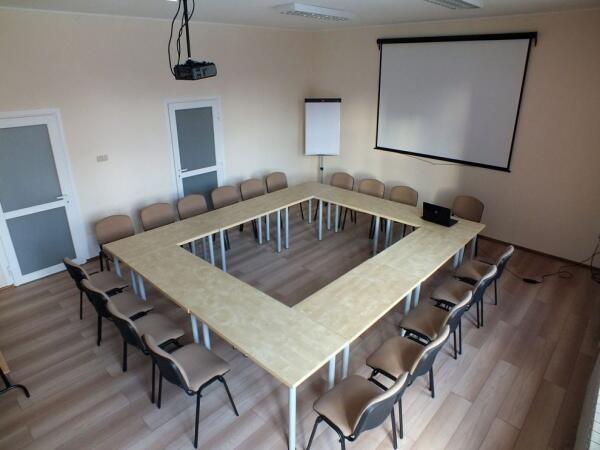
The training room is located in the very heart of Rzeszow, making it easily accessible for participants. In the immediate vicinity, there are major public transportation hubs, such as city buses (MPK), railways (PKP), and long-distance buses (PKS), facilitating access from various parts of the city and beyond. Additionally, there is an underground parking garage at the Center Park gallery nearby, providing convenient parking for those using their own vehicles.

Python is the core language powering the development and orchestration of autonomous AI agents. This course focuses on practical implementation using modern SDKs and frameworks such as LangChain and AutoGen to build, connect, and manage agent workflows.
This instructor-led, live training (online or onsite) is aimed at intermediate-level backend engineers, platform engineers, and ML engineers who wish to implement and orchestrate autonomous agents using Python tooling and APIs.
By the end of this training, participants will be able to:
Set up and configure Python-based environments for agentic systems.
Use popular agent SDKs like LangChain and AutoGen to create functional agents.
Integrate tools and APIs to extend agent capabilities.
Orchestrate multi-agent workflows and communication patterns.
Apply best practices for debugging, testing, and maintaining agentic codebases.
Format of the Course
Interactive lecture and discussion.
Hands-on programming exercises and live demos.
Practical projects building end-to-end agent workflows.
Course Customization Options
To request a customized training for this course, please contact us to arrange.
This course teaches practical engineering techniques to design, build, test, and deploy agentic (autonomous) systems using Python. It covers the agent loop, tool integrations, memory and state management, orchestration patterns, safety controls, and production considerations.
This instructor-led, live training (online or onsite) is aimed at intermediate-level to advanced-level ML engineers, AI developers, and software engineers who wish to build robust, production-ready autonomous agents using Python.
By the end of this training, participants will be able to:
Design and implement the agent loop and decision-making workflows.
Integrate external tools and APIs to extend agent capabilities.
Implement short-term and long-term memory architectures for agents.
Coordinate multi-step orchestrations and agent composability.
Apply safety, access control, and observability best practices for deployed agents.
Format of the Course
Interactive lecture and discussion.
Hands-on labs building agents with Python and popular SDKs.
Project-based exercises that produce deployable prototypes.
Course Customization Options
To request a customized training for this course, please contact us to arrange.
Artificial Intelligence with Python is the development of intelligent systems using Python’s extensive ecosystem of AI and machine learning libraries.
This instructor-led, live training (online or onsite) is aimed at intermediate-level Python programmers who wish to design, implement, and deploy AI solutions using Python.
By the end of this training, participants will be able to:
Implement AI algorithms using Python’s core AI libraries.
Work with supervised, unsupervised, and reinforcement learning models.
Integrate AI solutions into existing applications and workflows.
Evaluate model performance and optimize for accuracy and efficiency.
Format of the Course
Interactive lecture and discussion.
Lots of exercises and practice.
Hands-on implementation in a live-lab environment.
Course Customization Options
To request a customized training for this course, please contact us to arrange.
This instructor-led, live training in Rzeszow (online or onsite) is aimed at intermediate-level Python developers who wish to enhance their Python development experience using AWS Cloud9.
By the end of this training, participants will be able to:
Set up and configure AWS Cloud9 for Python development.
Understand the AWS Cloud9 IDE interface and features.
Write, debug, and deploy Python applications in AWS Cloud9.
Collaborate with other developers using the AWS Cloud9 platform.
Integrate AWS Cloud9 with other AWS services for advanced deployments.
This instructor-led, live training in Rzeszow (online or onsite) is aimed at expert-level data analysts who wish to leverage Python's data analysis capabilities within Power BI, enhancing their ability to analyze and visualize data effectively.
By the end of this training, participants will be able to:
Learn how Python can be integrated into Power BI for data analysis.
Use Python scripts to load, clean, and preprocess data within the Power BI environment.
Enhance data visualization capabilities by creating custom and interactive visualizations using Python.
Acquire advanced data analysis skills using Python.
Python is a versatile programming language widely used for data manipulation, automation, and analytics. Libraries like Pandas and Polars provide powerful, practical tools for working with tabular data at scale.
This instructor-led, live training (online or onsite) is aimed at beginner-level to intermediate-level professionals who wish to apply Python for everyday data analysis, file processing, and process automation using Pandas and Polars.
By the end of this training, participants will be able to:
Use Python to read, transform, and write CSV and Excel files.
Perform common data cleaning and transformation tasks with Pandas and Polars.
Automate repetitive data processes with Python scripts.
Package simple scripts into executables and follow best practices for projects.
Format of the Course
Interactive coding demonstrations and short lectures.
Hands-on exercises with guided code examples.
Practical mini-projects to automate real-world tasks.
Course Customization Options
To request a customized training for this course, please contact us to arrange.
This intensive, hands-on course covers advanced Python techniques, engineering best practices, and commonly used design patterns to build maintainable, testable, and high-performance Python applications. It emphasizes modern tooling, typing, concurrency models, architecture patterns, and deployment-ready workflows.
This instructor-led, live training (online or onsite) is aimed at intermediate-level to advanced-level Python developers who wish to adopt professional practices and patterns for production-grade Python systems.
By the end of this training, participants will be able to:
Apply Python typing, dataclasses, and type-checking to increase code reliability.
Use design patterns and architecture principles to structure robust applications.
Implement concurrency and parallelism correctly using asyncio and multiprocessing.
Build well-tested code with pytest, property-based testing, and CI pipelines.
Profile, optimize, and harden Python applications for production.
Package, distribute, and deploy Python projects using modern tools and containers.
Format of the Course
Interactive lectures and short demos.
Hands-on labs and coding exercises each day.
Capstone mini-project integrating patterns, testing, and deployment.
Course Customization Options
To request a customized training or focus area (data, web, or infra), please contact us to arrange.
This instructor-led, live training in Rzeszow (online or onsite) is aimed at beginner-level developers and data analysts who wish to learn Python programming from scratch using Google Colab.
By the end of this training, participants will be able to:
Understand the basics of Python programming language.
Implement Python code in Google Colab environment.
Utilize control structures to manage the flow of a Python program.
Create functions to organize and reuse code effectively.
Explore and use basic libraries for Python programming.
This instructor-led, live training in (online or onsite) is aimed at developers who wish to use the FARM (FastAPI, React, and MongoDB) stack to build dynamic, high-performance, and scalable web applications.
By the end of this training, participants will be able to:
Set up the necessary development environment that integrates FastAPI, React, and MongoDB.
Understand the key concepts, features, and benefits of the FARM stack.
Learn how to build REST APIs with FastAPI.
Learn how to design interactive applications with React.
Develop, test, and deploy applications (front end and back end) using the FARM stack.
This instructor-led, live training in Rzeszow (online or onsite) is aimed at beginner-level to intermediate-level and potentially advanced-level robotics developers who wish to learn how to use ROS to program mobile robots using Python.
By the end of this training, participants will be able to:
Set up a development environment that includes ROS, Python, and a mobile robot platform.
Create and run ROS nodes, topics, services, and actions using Python.
Use ROS tools and utilities to monitor and debug ROS applications.
Use ROS packages and libraries to perform common tasks for mobile robots.
This course is designed for those wishing to learn the Python programming language. The emphasis is on the Python language, the core libraries, as well as on the selection of the best and most useful libraries developed by the Python community. Python drives businesses and is used by scientists all over the world – it is one of the most popular programming languages.
The course can be delivered using the latest Python version 3.x with practical exercises making use of the full power. This course can be delivered on any operating system (all flavours of UNIX, including Linux and Mac OS X, as well as Microsoft Windows).
The practical exercises constitute about 70% of the course time, and around 30% are demonstrations and presentations. Discussions and questions can be asked throughout the course.
Note: the training can be tailored to specific needs upon prior request ahead of the proposed course date.
This instructor-led, live training in Rzeszow (online or onsite) is aimed at developers who wish to learn advanced Python programming techniques, including how to apply this versatile language to solve problems in areas such as distributed applications, data analysis and visualization, UI programming and maintenance scripting.
This course is designed for those wishing to learn the Python programming language. The emphasis is on the Python language, the core libraries, as well as on the selection of the best and most useful libraries developed by the Python community. Python drives businesses and is used by scientists all over the world – it is one of the most popular programming languages.
This instructor-led, live training in Rzeszow is based on the popular book, "Automate the Boring Stuff with Python", by Al Sweigart. It is aimed at beginners and covers essential Python programming concepts through practical, hands-on exercises and discussions. The focus is on learning to write code to dramatically increase office productivity.
By the end of this training, participants will know how to program in Python and apply this new skill for:
Automating tasks by writing simple Python programs.
Writing programs that can do text pattern recognition with "regular expressions".
Programmatically generating and updating Excel spreadsheets.
Parsing PDFs and Word documents.
Crawling web sites and pulling information from online sources.
Writing programs that send out email notifications.
Use Python's debugging tools to quickly resolve bugs.
Programmatically controlling the mouse and keyboard to click and type for you.
In this instructor-led, live training in Rzeszow, participants will learn the most relevant and cutting-edge machine learning techniques in Python as they build a series of demo applications involving image, music, text, and financial data.
By the end of this training, participants will be able to:
Implement machine learning algorithms and techniques for solving complex problems.
Apply deep learning and semi-supervised learning to applications involving image, music, text, and financial data.
Push Python algorithms to their maximum potential.
Use libraries and packages such as NumPy and Theano.
This instructor-led, live training in Rzeszow (online or onsite) is aimed at intermediate-level Python developers and data analysts who wish to enhance their skills in data analysis and manipulation using Pandas and NumPy.
By the end of this training, participants will be able to:
Set up a development environment that includes Python, Pandas, and NumPy.
Create a data analysis application using Pandas and NumPy.
Perform advanced data wrangling, sorting, and filtering operations.
Conduct aggregate operations and analyze time series data.
Visualize data using Matplotlib and other visualization libraries.
The aim of this course is to provide general proficiency in applying Machine Learning methods in practice. Through the use of the Python programming language and its various libraries, and based on a multitude of practical examples this course teaches how to use the most important building blocks of Machine Learning, how to make data modeling decisions, interpret the outputs of the algorithms and validate the results.
Our goal is to give you the skills to understand and use the most fundamental tools from the Machine Learning toolbox confidently and avoid the common pitfalls of Data Sciences applications.
Python is a programming language that has gained huge popularity in the financial industry. Adopted by the largest investment banks and hedge funds, it is being used to build a wide range of financial applications ranging from core trading programs to risk management systems.
In this instructor-led, live training, participants will learn how to use Python to develop practical applications for solving a number of specific finance related problems.
By the end of this training, participants will be able to:
Understand the fundamentals of the Python programming language
Download, install and maintain the best development tools for creating financial applications in Python
Select and utilize the most suitable Python packages and programming techniques to organize, visualize, and analyze financial data from various sources (CSV, Excel, databases, web, etc.)
Build applications that solve problems related to asset allocation, risk analysis, investment performance and more
Troubleshoot, integrate, deploy, and optimize a Python application
Audience
Developers
Analysts
Quants
Format of the course
Part lecture, part discussion, exercises and heavy hands-on practice
Note
This training aims to provide solutions for some of the principle problems faced by finance professionals. However, if you have a particular topic, tool or technique that you wish to append or elaborate further on, please please contact us to arrange.
Dives into practical approaches to Data Science and AI using Python — equips professionals with the skills to explore data, build machine learning models, and deploy AI-driven applications in business contexts; Covers CRISP-DM workflows, statistical analysis, supervised and unsupervised learning, deep learning with Tensorflow, natural language processing, big data with Spark, and data-driven storytelling; Ideal for beginners seeking a Python data science certification and career-ready analytics training.
Applied AI from Scratch in Python equips programmers and data analysts with foundational techniques for building machine learning solutions from the ground up using Python. Covers core principles of supervised learning classification and regression, unsupervised learning clustering and anomaly detection, and advanced neural network architectures. Examines proven methods for working with scikit-learn, Apache Spark MLlib, and Jupyter notebooks for hands-on AI development. Helps professionals implement practical ML models, evaluate algorithm limitations, and complete applied projects for real-world problem solving.
Selenium is an open-source framework for automating web application testing across different browsers. With Selenium 4, enhanced WebDriver APIs, native relative locators, and improved grid support are available. Python offers simplicity and strong integration with testing frameworks like Pytest, making it a powerful choice for developing scalable and maintainable test automation suites.
This instructor-led, live training (online or onsite) is aimed at beginner-level to intermediate-level testers and developers who wish to use Selenium with Python to automate web application testing in real-world environments.
By the end of this training, participants will be able to:
Install and configure Selenium with Python in a test environment.
Build robust test automation scripts using Selenium WebDriver and Pytest.
Apply Page Object Model (POM) for maintainable test frameworks.
Run tests across multiple browsers using Selenium Grid.
Integrate automated tests with CI/CD pipelines.
Troubleshoot common issues and apply best practices for automation stability.
Format of the Course
Interactive lecture and discussion.
Lots of exercises and practice.
Hands-on implementation in a live-lab environment.
Course Customization Options
To request a customized training for this course, please contact us to arrange.
This instructor-led, live training in Rzeszow (online or onsite) is aimed at Matlab users who wish to explore and or transition to Python for data analytics and visualization.
By the end of this training, participants will be able to:
Install and configure a Python development environment.
Understand the differences and similarities between Matlab and Python syntax.
Use Python to obtain insights from various datasets.
This instructor-led, live training in Rzeszow (online or onsite) is aimed at persons who wish to learn just enough Python to begin crunching numbers from sales data, traffic analytics, customer interactions, etc..
By the end of this training, participants will be able to:
Install and configure the necessary software, libraries and development environment to begin writing Python code for data analysis.
Analyze data from sources such as Excel, CSV, JSON files and databases.
Clean data to improve its usefulness before analyzing it.
Perform simple statistical analysis.
Generate reports that present the desired data in just the right format, from straight numbers to data visualizations.
Gain valuable insight from data, including trends in performance, problematic areas.
"Python Training for Programmers" is a comprehensive course that provides in-depth knowledge of the Python language for programmers. Participants will gain skills in data structures, classes, file handling, network communication, and integration with other programs. The course covers practical aspects such as configuring editors, running programs in different environments, and installing additional libraries.
This hands-on training is designed for professionals with a background in data engineering who want to build practical skills in artificial intelligence, Python, and large language models. The course focuses on real-world applications, covering model usage, prompt engineering, and building AI-powered solutions. Participants will work through progressive exercises that move from core concepts to building deployable AI workflows.
Format of Training
• In-person classroom training
• Instructor-led sessions with guided practice
• Interactive discussions and real-world case studies
• Daily hands-on exercises
Course Objectives
• Understand core AI and machine learning concepts relevant to modern applications
• Strengthen Python skills for AI development and data workflows
• Learn how large language models work and how to use them effectively
• Design and optimize prompts for reliable outputs
• Build end-to-end AI solutions using APIs and frameworks
The training focuses on practical use of the Streamlit library to create interactive web applications and analytical dashboards in Python. Participants will learn to build functional user interfaces without needing to know HTML, CSS, or JavaScript.
The program covers all key components of Streamlit – from basic text elements and layout, through interactive input widgets, to advanced features such as forms, charts, and file handling. Participants will understand mechanisms for managing session state, caching results, and integrating with databases, which allows for the creation of efficient production applications.
Special emphasis is placed on practical application – each theory module is enriched with exercises, and the training concludes with the creation of a complete project or two, depending on time availability.
Upon completion of the training, participants will be able to independently design Streamlit applications – from simple dashboards to advanced analytical tools. They will acquire skills that enable rapid prototyping of data science solutions and creating interfaces for machine learning models.
This instructor-led, live training in Rzeszow (online or onsite) is aimed at developers who wish to use FastAPI with Python to build, test, and deploy RESTful APIs easier and faster.
By the end of this training, participants will be able to:
Set up the necessary development environment to develop APIs with Python and FastAPI.
Create APIs quicker and easier using the FastAPI library.
Learn how to create data models and schemas based on Pydantic and OpenAPI.
Connect APIs to a database using SQLAlchemy.
Implement security and authentication in APIs using the FastAPI tools.
Build container images and deploy web APIs to a cloud server.
The training focuses on practical learning of creating REST APIs using the FastAPI framework. Participants will learn the complete process of building a web application—from understanding client-server architecture and the HTTP protocol, through implementing all CRUD operations, to integrating with a database and securing the application.
The program includes working on a simple, example project that participants build step by step. They will learn to define endpoints, validate input data using Pydantic, handle errors, and return appropriate HTTP status codes. They will also explore two approaches to working with databases: direct SQL queries through psycopg and ORM SQLAlchemy.
We place a strong emphasis on code organization—modularization, separation of logic, and good practices for project structuring. Participants will also learn to test their APIs using TestClient, work with automatically generated documentation, and implement authentication and password hashing mechanisms.
After the training, participants will be able to independently design and implement functional REST APIs connected to a database, secured, and ready for further development. They will gain practical knowledge that allows them to start working as backend developers in Python.
This instructor-led, live training in Rzeszow (online or onsite) is aimed at data scientists who wish to use TensorFlow to analyze potential fraud data.
By the end of this training, participants will be able to:
Create a fraud detection model in Python and TensorFlow.
Build linear regressions and linear regression models to predict fraud.
Develop an end-to-end AI application for analyzing fraud data.
The training provides a comprehensive approach to integrating Python applications with PostgreSQL databases. The program covers three main tools – the psycopg library for direct communication with the database, Pandas for operations on tabular data, and ORM SQLAlchemy for object-oriented data management.
Participants will learn to safely execute SQL queries using parameterization that protects against SQL injection attacks. The program also includes integration with the Pandas library, enabling efficient loading and exporting of data between DataFrame and PostgreSQL.
A significant portion of the training is dedicated to SQLAlchemy – participants will learn to define data models as Python classes, map them to tables, and perform all CRUD operations without writing raw SQL. They will explore techniques for filtering, sorting, grouping data, and managing relationships between tables in an object-oriented manner.
Upon completion of the training, participants will be able to choose the appropriate tool for specific use cases, communicate safely with the database, and utilize both low-level SQL queries and high-level ORM abstractions. They will gain practical skills essential for daily work with databases in Python projects.
This instructor-led, live training in Rzeszow (online or onsite) is aimed at network engineers who wish to maintain, manage, and design computer networks with Python.
By the end of this training, participants will be able to:
Optimize and leverage Paramiko, Netmiko, Napalm, Telnet, and pyntc for network automation with Python.
Master multi-threading and multiprocessing in network automation.
This instructor-led, live training in Rzeszow (online or onsite) is aimed at business professionals and data analysts with intermediate Python skills who wish to apply Python to automate workflows, analyze business data, and generate dynamic Excel-based reports.
The training covers key tools used in analytical work and data science:
NumPy (array operations), Pandas (tabular data analysis), and visualization libraries.
Modules guide participants from the basics of data processing to creating charts
and exploratory data analysis (EDA).
The "Python Programming" course covers an introduction to the Python language, installation and configuration of the environment, basic syntax, procedural and object-oriented programming, exception handling, code organization, using the standard library, installing external libraries, input/output operations, software testing and debugging, as well as applications of the Python language. Participants will acquire the skills needed for effective Python programming in various contexts, such as web applications, data analysis, or scientific computing. Good Python programming practices are also discussed during the course.
Computer Vision is a field that involves automatically extracting, analyzing, and understanding useful information from digital media. Python is a high-level programming language famous for its clear syntax and code readibility.
In this instructor-led, live training, participants will learn the basics of Computer Vision as they step through the creation of set of simple Computer Vision application using Python.
By the end of this training, participants will be able to:
Understand the basics of Computer Vision
Use Python to implement Computer Vision tasks
Build their own face, object, and motion detection systems
Audience
Python programmers interested in Computer Vision
Format of the course
Part lecture, part discussion, exercises and heavy hands-on practice
This hands-on course is designed for Unix and shell users who want to enhance their automation capabilities by leveraging Python. While shell scripting remains powerful for simple tasks, Python provides significantly greater flexibility, readability, and scalability for complex automation, system administration, and DevOps workflows.
The trainer's strong substantive preparation. Additionally, the trainer engaged participants even in the lecture part, encouraging "brainstorming" and sharing their observations and ideas.
Krzysztof Wojciechowski - HUUUGE GAMES SPOLKA Z OGRANICZONA ODPOWIEDZIALNOSCIA
Course - Test Automation with Selenium and Python
Machine Translated
everything was perfect
Florin Vrincianu
Course - Python Programming Fundamentals
The number of users is correct. The trainer delivered the information with enthusiasm.
Alberto Rivas - SEG AUTOMOTIVE SPAIN, S.A.U.
Course - Python Programming - 4 days
Trainer's readiness to conduct experiments proposed by participants
Tomasz Szypenbejl
Course - Python dla programistów
Machine Translated
Hands-on exercises related to content really helps to understand more about each topic. Also, style of start class with lecture and continue with hands-on exercise is good and helpful to relate with the lecture that presented earlier.
Nazeera Mohamad - Ministry of Science, Technology and Innovation
Course - Introduction to Data Science and AI using Python
Scope of knowledge and collaboration with the group
Dariusz Szymanski - DKWOC
Course - Python for Matlab Users
Machine Translated
Got to know a lot of new thngs.
Roland - Diehl Aviation
Course - Advanced Python - 4 Days
Preparation of materials and code (with comments). Coherence of the teaching process and topic progression. Preparation of the instructor.
Piotr - ArcelorMittal
Course - Machine Learning with Python – 4 Days
Machine Translated
The trainer is a very well-disposed person and has a lot of knowledge of the topic. He was always there to ask our questions and to help out with our doubts
Online Python training in Rzeszow, Python training courses in Rzeszow, Weekend courses in Rzeszow, Evening training in Rzeszow, instructor-led in Rzeszow, Python instructor in Rzeszow, Weekend training in Rzeszow, instructor-led in Rzeszow, Python coaching in Rzeszow, Python boot camp in Rzeszow, on-site in Rzeszow, Evening courses in Rzeszow, classes in Rzeszow, Online training in Rzeszow, trainer in Rzeszow, private courses in Rzeszow, one on one training in Rzeszow