Online or onsite, instructor-led live Model-Based Systems Engineering (MBSE) training courses demonstrate through interactive discussion and hands-on practice how systems can be modelled using any suitable system modelling method or tool.
MBSE training is available as "online live training" or "onsite live training". Online live training (aka "remote live training") is carried out by way of an interactive, remote desktop. Onsite live MBSE trainings in Zakopane can be carried out locally on customer premises or in NobleProg corporate training centers.
NobleProg -- Your Local Training Provider
Zakopane
Dafne, Jagiellońska 30, Zakopane, Poland, 34-500
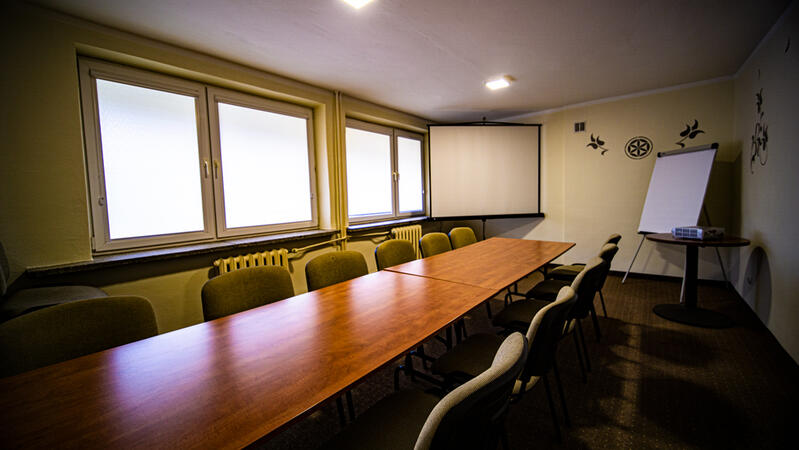
The training room is located just 350 meters from the railway and bus stations and 700 meters from Krupówki, the main shopping street in Zakopane. There is a fenced parking area on the premises, providing convenience for participants traveling by car and facilitating access to the facility.
Using a combination of lectures, demos, and interactive labs, this course showcases the foundations for building and maintaining an Enterprise Architecture (EA) utilizing the Unified Architecture Framework (UAF) version 1.2.
This instructor-led, live training is aimed at beginner-level engineers and professionals who wish to use MBPLE within CATIA Magic to understand and implement product line engineering concepts.
By the end of this training, participants will be able to:
Understand the key concepts and vocabulary of PLE and MBPLE
Describe best practices for product line modeling
Implement a product line definition process in CATIA Magic
Use MBPLE features such as feature models, variation points, and configurations
The course is designed to teach the fundamentals of the Systems Modeling Language (SysML), its application through the MagicDraw/Cameo software, basic Model-Based Systems Engineering (MBSE) simulation techniques, and best practices in MBSE. This training covers the fundamentals of creating templates and generating reports within the MagicDraw/Cameo tool suite, and teaches how macros and scripts work inside MagicDraw and what they can be applied to.
The course is designed to teach the fundamentals of the Systems Modeling Language (SysML), its application through the MagicDraw/Cameo software, basic Model-Based Systems Engineering (MBSE) simulation techniques, and best practices in MBSE. This training is also designed to provide professionals with a background behind architectural simulation, an introduction to the Simulation Toolkit plugin, the simulation of multiple diagram types, and how to tie diagram simulations together to automate the architecture.
The course is designed to teach the fundamentals of the Systems Modeling Language (SysML), its application through the MagicDraw/Cameo software, basic Model-Based Systems Engineering (MBSE) simulation techniques, and best practices in MBSE. This training teaches the core concepts and features of validation rules, validation suites, and model metrics and is designed to introduce the core concepts and features of developing and utilizing model queries in MagicDraw/Cameo.
The course is designed to teach the fundamentals of the Systems Modeling Language (SysML), its application through the MagicDraw/Cameo software, basic Model-Based Systems Engineering (MBSE) simulation techniques, and best practices in MBSE. This training provides a basic introduction to the core concepts and features of CATIA No Magic’s Teamwork Cloud, along with introducing the core concepts and features of Domain Specific Languages (DSL) in MagicDraw.
This course provides a mix of module-based lectures, instructor demonstration, and hands-on labs. Our trainers are all experienced practitioners who understand the balance of theory and practicality.
This instructor-led, live training in (online or onsite) is aimed at beginner to intermediate-level professionals who wish to understand configuration management risks and apply product line engineering concepts with or without dedicated tools.
By the end of this training, participants will be able to: Analyze risks related to product changes throughout the lifecycle; Apply best practices in configuration management; Understand key concepts of product line engineering; Model variability and product lines with or without tools; Implement an end-to-end process from variability definition to product derivation; And evaluate the benefits of using tools such as pure::variants and FeatureIDE
This instructor-led, live training in (online or onsite) is aimed at beginner-level professionals who wish to use pure::variants to understand and implement product line engineering concepts.
By the end of this training, participants will be able to:
Understand product line engineering concepts applied with pure::variants
Analyze best practices for product line modeling
Implement an end-to-end variability process (from definition to variant instantiation)
Use pure::variants with connectors such as Microsoft Office
This instructor-led, live training (online or onsite) is aimed at beginner-level professionals who wish to understand the value, challenges, and implementation principles of MBSE using the ARCADIA method and the Capella tool.
By the end of this training, participants will be able to Understand the principles and benefits of MBSE; Describe the ARCADIA methodology and its positioning within systems engineering; Explain the added value of Capella compared to traditional document-based tools; Identify impacts of MBSE adoption on engineering processes and practices; and Understand MBSE contribution to digital continuity and multidisciplinary collaboration
This instructor-led, live training (online or onsite) is aimed at beginner to intermediate-level professionals who wish to learn and apply MBSE using the ARCADIA method and the Capella tool.
By the end of this training, participants will be able to: Understand MBSE principles and their alignment with ISO 15288:2023; Describe the ARCADIA methodology and its different architectural layers; Apply ARCADIA from operational need to physical architecture; Use Capella to build, analyze, and manage system models; Implement best practices in system modeling through a real case study
This instructor-led, live training (online or onsite) is aimed at professionals and domain experts who wish to understand MBSE concepts and efficiently review system models created using the ARCADIA method and the Capella tool.
By the end of this training, participants will be able to:
Understand the ARCADIA methodology and its architectural layers
Navigate and interpret Capella models
Assess the consistency of models with system requirements and architecture
Perform structured model reviews
Add clear and relevant review comments within Capella
This 3-day training in Zakopane equips system engineers with UML 2 and SysML skills for efficient requirements gathering and embedded software design. Learn to trace business rules to implementation, modeling blocks and interactions using Enterprise Architect for agile, coherent system architectures.
This practical course in Zakopane delivers a deep understanding of systems modelling using the latest OMG SysML specification. It covers notation and semantics, enabling students to apply their skills to any suitable system modelling method or tool for real-world applications.
Practical Systems Modeling with SysML v2 focuses on building a connected system model, from requirements and use cases to structure, behavior, interfaces and analysis. It combines learning the language with understanding how its elements work together to describe a system.
In this live training held in Zakopane, participants will explore the deep interplay between software, technical, and enterprise architecture. Learn to manage complex distributed systems and trade-offs while mastering common patterns for SOA, microservices, and efficient communication between systems.
Read more...
Last Updated:
Testimonials (3)
Detailed use of EA SW and understanding of main SySUML concepts
Marco Barducci - IDS Ingegneria Dei Sistemi S.p.A.
Course - Systems Modelling with SysML
The explanation of all components and usages of them on the examples
Online Model-Based Systems Engineering (MBSE) training in Zakopane, MBSE (Model-Based Systems Engineering) training courses in Zakopane, Weekend Model-Based Systems Engineering courses in Zakopane, Evening Model-Based Systems Engineering (MBSE) training in Zakopane, MBSE (Model-Based Systems Engineering) instructor-led in Zakopane, Model-Based Systems Engineering instructor in Zakopane, MBSE (Model-Based Systems Engineering) instructor-led in Zakopane, Online Model-Based Systems Engineering (MBSE) training in Zakopane, Model-Based Systems Engineering boot camp in Zakopane, Evening MBSE (Model-Based Systems Engineering) courses in Zakopane, Weekend Model-Based Systems Engineering training in Zakopane, Model-Based Systems Engineering (MBSE) one on one training in Zakopane, MBSE coaching in Zakopane, MBSE (Model-Based Systems Engineering) trainer in Zakopane, MBSE (Model-Based Systems Engineering) on-site in Zakopane, MBSE (Model-Based Systems Engineering) private courses in Zakopane, MBSE classes in Zakopane