Online or onsite, instructor-led live Embedded Systems training courses demonstrate through interactive hands-on practice the fundamentals and advanced topics of Embedded Systems.
Embedded Systems training is available as "online live training" or "onsite live training". Online live training (aka "remote live training") is carried out by way of an interactive, remote desktop. Onsite live Embedded Systems trainings in Zakopane can be carried out locally on customer premises or in NobleProg corporate training centers.
NobleProg -- Your Local Training Provider
Zakopane
Dafne, Jagiellońska 30, Zakopane, Poland, 34-500
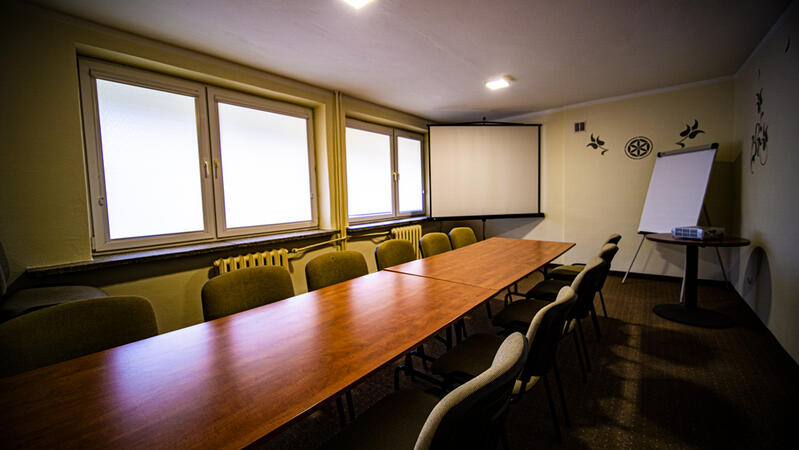
The training room is located just 350 meters from the railway and bus stations and 700 meters from Krupówki, the main shopping street in Zakopane. There is a fenced parking area on the premises, providing convenience for participants traveling by car and facilitating access to the facility.
Intermediate Rust for Embedded Systems covers toolchains, safety patterns, and real-time workflows in Zakopane. This live training helps developers build reliable firmware using no_std and embedded-hal. It focuses on concurrency, debugging, and hardware deployment.
This instructor-led, live training in Zakopane (online or onsite) is aimed at developers and embedded systems engineers who wish to leverage Rust for embedded systems programming and gain the necessary skills to develop robust and efficient embedded applications.
By the end of this training, participants will be able to:
Set up a development environment for Rust embedded systems programming.
Understand and work with microcontrollers and their peripherals using Rust.
Write efficient and reliable code for resource-constrained embedded systems.
Handle concurrency and real-time requirements in embedded applications.
Interface with hardware and use low-level abstractions in Rust.
Apply power management and low-power optimization techniques in embedded systems.
This instructor-led, live training in Zakopane (online or onsite) is aimed at intermediate-level automotive engineers and technicians who wish to gain hands-on experience in testing, simulating, and diagnosing ECUs using Vector tools like CANoe and CANape.
By the end of this training, participants will be able to:
Understand the role and function of ECUs in automotive systems.
Set up and configure Vector tools such as CANoe and CANape.
Simulate and test ECU communication on CAN and LIN networks.
Analyze data and perform diagnostics on ECUs.
Create test cases and automate testing workflows.
Calibrate and optimize ECUs using practical approaches.
This instructor-led, live training in Zakopane (online or onsite) is aimed at intermediate-level automotive engineers and embedded systems developers who wish to understand the theoretical aspects of ECUs, focusing on Vector-based tools and methodologies used in automotive design and development.
By the end of this training, participants will be able to:
Understand the architecture and functions of ECUs in modern vehicles.
Analyze communication protocols used in ECU development.
Explore Vector-based tools and their theoretical applications.
Apply model-based development principles to ECU design.
This instructor-led, live training in Zakopane (online or onsite) is aimed at intermediate-level embedded systems engineers and AI developers who wish to deploy machine learning models on microcontrollers using TensorFlow Lite and Edge Impulse.
By the end of this training, participants will be able to:
Understand the fundamentals of TinyML and its benefits for edge AI applications.
Set up a development environment for TinyML projects.
Train, optimize, and deploy AI models on low-power microcontrollers.
Use TensorFlow Lite and Edge Impulse to implement real-world TinyML applications.
Optimize AI models for power efficiency and memory constraints.
This beginner-friendly instructor-led live training in Zakopane covers the fundamentals of embedded systems and IoT. Participants will learn C programming, microcontroller architectures, and how to configure hardware peripherals. The course provides hands-on exercises to build practical skills.
This instructor-led, live training in Zakopane (online or onsite) is aimed at engineers who wish to learn how to use embedded C to program various types of microcontrollers based on different processor architectures (8051, ARM CORTEX M-3, and ARM9).
In this instructor-led, live training in Zakopane, participants will learn how to program the Arduino for real-world usage, such as to control lights, motors and motion detection sensors. This course assumes the use of real hardware components in a live lab environment (not software-simulated hardware).
By the end of this training, participants will be able to:
Program Arduino to control lights, motors, and other devices.
Understand Arduino's architecture, including inputs and connectors for add-on devices.
Add third-party components such as LCDs, accelerometers, gyroscopes, and GPS trackers to extend Arduino's functionality.
Understand the various options in programming languages, from C to drag-and-drop languages.
Test, debug, and deploy the Arduino to solve real world problems.
This instructor-led course in Zakopane explores how C++ fits embedded systems. It covers object-oriented design, memory management, and real-time programming to build accurate, efficient code. Participants will create a sample application to gain practical skills.
This instructor-led, live training in Zakopane (online or onsite) is aimed at engineers and scientists who wish to learn and apply DSP implementations to efficiently handle different signal types and gain better control over multi-channel electronic systems.
By the end of this training, participants will be able to:
Setup and configure the necessary software platform and tools for Digital Signal Processing.
Understand the concepts and principles that are foundational to DSP and its applications.
Familiarize themselves with DSP components and employ them in electronics systems.
Generate algorithms and operational functions using the results from DSP.
Utilize the basic features of DSP software platforms and design signal filters.
Synthesize DSP simulations and implement various types of filters for DSP.
This live training in Zakopane covers embedded C design principles, helping developers understand reliability, functionality, and logic. It includes hands-on exercises to design error-free applications, optimize hardware performance, and master system constraints, code reusability, and maintainability.
This hands-on training in Zakopane guides engineers through Embedded Linux kernel internals, architecture, and driver development. Learners will configure, compile, and boot custom kernels, while also mastering device tree fundamentals and writing character device drivers for real-world applications.
This hands-on course in Zakopane guides participants to build embedded Linux systems from the ground up. It covers bootloaders, cross-development, build systems, and application debugging. With 60% practical time, learners configure toolchains and construct custom filesystems for real-world projects.
This training in Zakopane bridges the gap between C and C++ for embedded systems. It explores C++11 features like move semantics and concurrency. Learn to use templates for bare-metal programming and apply design patterns. Gain the skills to use C++ correctly in resource-constrained environments.
This instructor-led, live training in Zakopane (online or onsite) is aimed at engineers who wish to design high-performance embedded systems using FPGA.
By the end of this training, participants will be able to:
Install and configure the FPGA software tools needed to design and simulate an embedded system.
Select the best FPGA architecture for an application.
In this instructor-led, live training in Zakopane, participants will learn how to code using FreeRTOS as they step through the development of a simple RTOS project using a microcontroller.
By the end of this training, participants will be able to:
Understand the basic concepts of real-time operating systems.
Learn the environment of FreeRTOS.
Learn how to code with FreeRTOS.
Interface a FreeRTOS application to hardware peripherals.
Attend an RTOS-based software design course in Zakopane. Learn synchronization mechanisms like queues and mutexes while building hands-on skills using STM32 Nucleo boards to effectively handle embedded systems, IoT development, and practical firmware challenges.
This instructor-led training in Zakopane covers core C++ OOP concepts like classes, encapsulation, and polymorphism. Developers learn to design modular, reusable applications through hands-on labs, exploring inheritance, exceptions, and templates to build scalable software solutions effectively.
This instructor-led, live training in (online or onsite) is aimed at embedded engineers and system administrators who wish to build, customize, and deploy OpenBMC firmware for server management.
This instructor-led, live training in (online or onsite) is aimed at hardware validation and system test engineers who wish to implement, test, and troubleshoot IPMI and sensor management on OpenBMC platforms.
This instructor-led, live training in (online or onsite) is aimed at security engineers and firmware developers who wish to harden OpenBMC deployments against unauthorized access and firmware tampering.
This instructor-led, live training in (online or onsite) is aimed at embedded Linux developers who wish to master the OpenBMC build system, customize layers, and create production-ready BMC firmware images.
This instructor-led, live training (online or onsite) is aimed at beginner-level to intermediate-level PCB designers and electronics engineers who wish to develop a complete and controlled PCB design workflow using Altium Designer.
Participants work on one connected project, progressing from project setup and component libraries through schematic capture, PCB layout and verification to manufacturing outputs and controlled production release.
By the end of this training, participants will be able to:
Create and manage structured Altium Designer PCB projects.
Build and validate schematic designs and component libraries.
Configure PCB rules, routing, DRC and manufacturing constraints.
Generate and verify fabrication, assembly and mechanical outputs.
Apply practical high-speed design constraints.
Manage engineering changes and controlled re-releases.
This instructor-led live training (online or on-site) is designed for beginner and intermediate PCB designers and electronics engineers who want to build a complete and controlled PCB design process in Altium Designer.
Participants work on one continuous project – from project setup and component libraries, through schematic design, PCB layout and verification, to production data and controlled release.
Upon completing the training, participants will be able to:
Create and manage organized PCB projects in Altium Designer.
Build and validate schematics and component libraries.
Configure PCB rules, routing, DRC, and manufacturing constraints.
Generate and verify data for board fabrication, assembly, and mechanics.
Apply practical constraints for high-speed signals.
Manage engineering changes and controlled re-releases.
This comprehensive course in Zakopane covers RISC-V architecture, assembly, Linux, FPGA, and AI applications. It addresses the global talent shortage by building expertise from ISA fundamentals to advanced SoC design. Ideal for engineers seeking to master modern, open-source computing stacks.
This course provides a comprehensive introduction to the Zig programming language, covering its syntax, memory management, application development, and advanced features. Participants will gain hands-on experience with Zig’s unique approach to safety, performance, and interoperability, making it a strong alternative to C and Rust. The course includes practical exercises to reinforce learning and build confidence in writing efficient, reliable Zig programs.
Read more...
Last Updated:
Testimonials (6)
Detailed explanation, re-iteration of points in a quite subtle way that really drove the knowledge home very well. Rod's willingness to double-check the odd obscure question that we rasied, to be sure that his answers were 100% right. Also, his interest in discussing the pros & cons of alternate coding styles so that we learnt not only how to use C++ in our intended way, but why it should be done that way.
Nick Dillon - cellxica Ltd
Course - Using C++ in Embedded Systems - Applying C++11/C++14
Great contact with participants, openness, willingness to share knowledge and experience
Lukasz Majkut
Course - Embedded Linux Kernel and Driver Development
Machine Translated
Being able to ask for advanced subjects even if there were not planned initially.
Gabriel Chouinard - Spark Microsystems
Course - FreeRTOS: Programming for Real Time Operating Systems
Trainer's Focus on Participants, Assistance, and Patience
Course - Introduction to Embedded Linux (Hands-on training)
Machine Translated
I really enjoyed the Trainer's knowledge of C++ and their extensive real-world experience, providing examples of usage and presenting real scenarios. Interaction with the group.
Sylwia Wnuczko - Jeppesen Poland Sp.z oo/ Boeing Company
Course - C++ for Embedded Systems
Machine Translated
Just getting off the ground and doing some basic things was super useful
Online Embedded Systems training in Zakopane, Embedded Systems training courses in Zakopane, Weekend Embedded Systems courses in Zakopane, Evening Embedded Systems training in Zakopane, Embedded Systems instructor-led in Zakopane, Embedded Systems coaching in Zakopane, Embedded Systems instructor in Zakopane, Weekend Embedded Systems training in Zakopane, Embedded Systems one on one training in Zakopane, Embedded Systems classes in Zakopane, Embedded Systems trainer in Zakopane, Online Embedded Systems training in Zakopane, Embedded Systems instructor-led in Zakopane, Embedded Systems on-site in Zakopane, Embedded Systems boot camp in Zakopane, Evening Embedded Systems courses in Zakopane, Embedded Systems private courses in Zakopane