Online or onsite, instructor-led live Design Thinking training courses demonstrate through case studies and live exercises how to apply the five stages of Design Thinking to better understand the problems experienced by end-users of a product or service, then develop the best approach for resolving them.
Design Thinking training is available as "online live training" or "onsite live training". Online live training (aka "remote live training") is carried out by way of an interactive, remote desktop. Onsite live Design Thinking trainings in Zakopane can be carried out locally on customer premises or in NobleProg corporate training centers.
NobleProg -- Your Local Training Provider
Zakopane
Dafne, Jagiellońska 30, Zakopane, Poland, 34-500
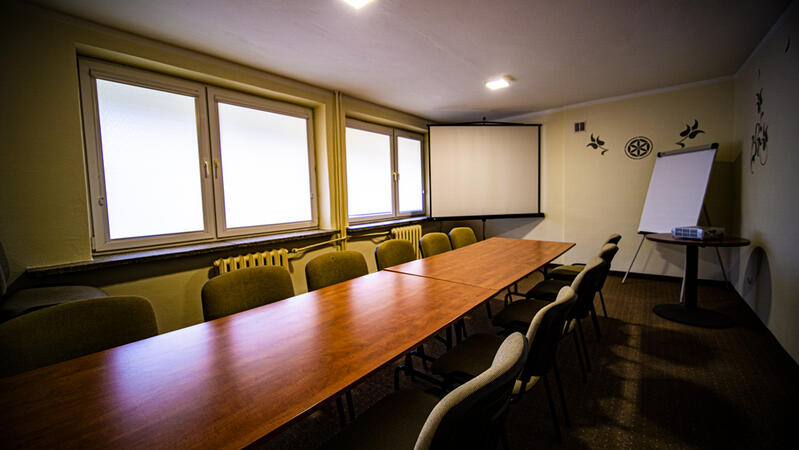
The training room is located just 350 meters from the railway and bus stations and 700 meters from Krupówki, the main shopping street in Zakopane. There is a fenced parking area on the premises, providing convenience for participants traveling by car and facilitating access to the facility.
In this Zakopane course, teams learn Design Thinking to solve problems through empathy, ideation, and prototyping. Focusing on the Empathize stage, you will connect pain points to internal client needs, transforming insights into actionable outcomes via dynamic collaborative activities.
This live training in Zakopane equips teams and leaders with the Empathize and Define stages of Design Thinking. Participants will master active listening, empathy mapping, and the 5 Whys technique to uncover root causes and draft clear, actionable problem statements for internal clients.
This instructor-led, live training in Zakopane (online or onsite) is aimed at beginner-level to intermediate-level professionals who wish to understand and apply Design Thinking methodologies to drive innovation and improve business solutions.
By the end of this training, participants will be able to:
Understand the core principles of Design Thinking and its role in innovation.
Apply the five phases of Design Thinking to problem-solving.
Utilize ideation techniques and tools to foster creativity.
Implement Design Thinking strategies to improve processes and enhance efficiency.
This instructor-led, live training in Zakopane (online or onsite) is aimed at beginner-level to intermediate-level participants who wish to solve everyday workplace challenges through gamification techniques.
By the end of this training, participants will be able to:
Understand the principles of Design Thinking and its application to problem-solving.
Incorporate gamification techniques to foster engagement and innovation.
Develop creative and practical solutions to common workplace issues.
Collaborate effectively across teams to implement problem-solving strategies.
Apply iterative approaches to refine solutions through feedback and experimentation.
This instructor-led, live training in Zakopane (online or onsite) is aimed at beginner-level leaders and HR professionals who wish to learn and apply Design Thinking methodologies to foster innovation, enhance problem-solving capabilities, and engage teams effectively.
By the end of this training, participants will be able to:
Equip participants with tools and methodologies to foster innovation and team engagement.
Develop skills in empathy mapping, ideation, and prototyping for solving complex challenges.
Apply Design Thinking principles to leadership and HR scenarios.
Promote a culture of innovation within tech teams.
In this instructor-led, live workshop training in Zakopane (online or onsite), participants will learn how to apply the five stages of Design Thinking to better understand the problems experienced by end-users of a product or service, then develop the best approach for resolving them.
By the end of this training, participants will be able to:
Use creative strategies to match customers' needs with technologically feasible solutions.
Formulate a strategy to increase customer value and enhance product and service offerings.
There are Five stages in the Design Thinking (DT) process (empathize, define the problem, ideate, prototype, test).
In an increasingly complex world, we deal with problems that may need special approaches. Design Thinking helps deal with complex problems. Mastering design-thinking helps to deal with complex problems effectively, communicate better, persuade efficiently, improve business results and enhances organizational and personal behavior and performance.
How DT works: learn from people and problem, find patterns, design model (model drift), test the model, evaluate the model and re-engineer.
Relationship between DT, innovation and entrepreneurship.
DT methods and tools: persona, stakeholder map, customer journey map, service blueprint, business model innovation.
Application of DT: design mindset, disruptive innovation, iterative approach, agile estimation technique, critical thinking, problem solving, teamwork, leadership readiness, communication skills, technology savvy, forward thinking, intercultural and ethical competency, emotional intelligence, self-awareness, negotiating skills, conflict resolution.
Objectives:
To understand the fundamentals and nuances of DT
To explore key concepts, factors, theories, types, and models in DT
To experiment, experience and practice DT
Delivery:
This is a 1 day (4 hours) training course and consists of:
lectures (40% - presentation of theories, concepts, models, and interactions),
group exercises (30% - group dynamics, games, group discussion, and mock-conflict resolution exercises),
individual activities (15% - writing, designing and peer discussion)
and others (15% - videos, reading).
Note: due to the nature of this course there is a minimum group size of 3
Design Thinking is a globally recognized method for creating innovative services, processes, and products.
At the heart of Design Thinking is the human. The essence of the method lies in properly defining the problem and focusing on the real needs of the end user. Awareness of this fundamental difference reduces the risk of failure.
The main goal of the training is to familiarize participants with the practical application of the method in everyday work.
Online Design Thinking training in Zakopane, Design Thinking training courses in Zakopane, Weekend Design Thinking courses in Zakopane, Evening Design Thinking training in Zakopane, Design Thinking instructor-led in Zakopane, Design Thinking private courses in Zakopane, Design Thinking instructor in Zakopane, Design Thinking trainer in Zakopane, Online Design Thinking training in Zakopane, Design Thinking instructor-led in Zakopane, Design Thinking classes in Zakopane, Evening Design Thinking courses in Zakopane, Design Thinking boot camp in Zakopane, Design Thinking coaching in Zakopane, Design Thinking on-site in Zakopane, Weekend Design Thinking training in Zakopane, Design Thinking one on one training in Zakopane