Online or onsite, instructor-led live Python skope-rules training courses demonstrate through interactive hands-on practice how to use skope-rules to automatically generate rules based on existing data sets.
Python skope-rules training is available as "online live training" or "onsite live training". Online live training (aka "remote live training") is carried out by way of an interactive, remote desktop. Onsite live Python skope-rules trainings in Kielce can be carried out locally on customer premises or in NobleProg corporate training centers.
NobleProg -- Your Local Training Provider
Kielce
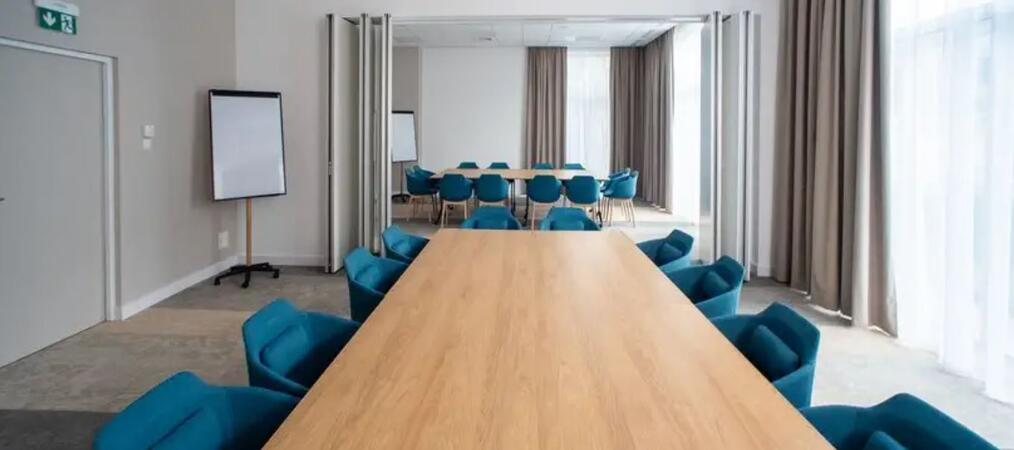
B&B HOTEL Kielce Centrum, Warszawska 19, Kielce, Poland, 25-516
The training rooms are located in the city center, at the intersection of Warszawska Street and Aleja IX Wieków Kielc. Just a short, few-minute walk separates the facility from the train station and the bus stop, and the proximity of Route E77 ensures quick connections to Krakow and Warsaw. Regardless of the mode of transportation you're using, you can easily reach this place.
This course introduces the student to the Python language. Upon completion of this class, the student will be able to write non trivial Python programs dealing with a wide variety of subject matter domains. Topics include language components, working with a professional IDE, control flow constructs, strings, I/O, collections, classes, modules, and regular expressions. The course is supplemented with many hands-on labs, solutions, and code examples.
After Completing the course students will be able to demonstrate knowledge and understanding of Python Security Principles.
This training allows participants to gradually enter the world of programming in the Python language. The course covers the most important elements of the language—from basic syntax and working with the environment, through data operations and program flow control, up to functions, modules, and the first elements of object-oriented programming.
Participants will become familiar with key constructs used in daily programming work, learn algorithmic thinking, and organize code in a transparent and consistent manner according to best practices. During the training, significant emphasis is placed on writing high-quality code and error analysis.
Upon completion of the training, participants will be able to independently write simple scripts, create functions and classes, organize projects into files, as well as understand, analyze, and run Python code in practical applications.
The training focuses on building a Retrieval Augmented Generation (RAG) system, which combines the capabilities of large language models with information retrieval from local documents. Participants will learn how to create applications that answer questions based on their own data, eliminating the problem of hallucinations and knowledge limitations in LLMs.
The program guides participants through all key stages of creating a RAG system. They will become familiar with communication principles using the OpenAI API and the LangChain framework, which facilitates working with language models. Participants will learn how to process documents in various formats, divide them into optimal segments, and transform them into vector representations. They will also get to know the Qdrant database and mechanisms for semantic search based on embedding similarity.
We place special emphasis on the quality of system performance—participants will implement result reranking techniques and learn how to quantify retrieval effectiveness and generated responses using the DeepEval library. The program also covers practical aspects of prompt engineering and methods for avoiding typical pitfalls when working with LLMs.
The outcome of the training will be a functional web application built in Streamlit, which allows users to ask questions about their own document base. Upon completing the course, participants will be able to independently design and implement a RAG system tailored to their specific business needs.
In this instructor-led, live training in Kielce (onsite or remote), participants will learn how to use Python skope-rules to automatically generate rules based on existing data sets.
By the end of this training, participants will be able to:
Use skope-rules to extract rules from available data.
Apply skope-rules to carry out classification, particularly useful in supervised anomaly detection, or imbalanced classification.
Generate rules for classifying new incoming data.
Fit rules to address real-world problems in fraud detection, predictive maintenance, intrusion detection, insurance application approvals, etc.
This training focuses on practical use of the Streamlit library to create interactive web applications and analytical dashboards in Python. Participants will learn to build functional user interfaces without needing knowledge of HTML, CSS, or JavaScript.
The program covers all key components of Streamlit – from basic text elements and layout to interactive input widgets, advanced features such as forms, charts, and file handling. Participants will understand session state management, result caching, and database integration, enabling them to create efficient production applications.
We emphasize practical application – each theoretical module is supplemented with exercises, and the training concludes with the creation of a complete project or two, depending on time availability.
Upon completing the training, participants will be able to design Streamlit applications independently – from simple dashboards to advanced analytical tools. They will gain skills for rapid prototyping of data science solutions and creating interfaces for machine learning models.
Online Python skope-rules training in Kielce, Python skope-rules training courses in Kielce, Weekend Python skope-rules courses in Kielce, Evening Python skope-rules training in Kielce, Python skope-rules instructor-led in Kielce, Weekend Python skope-rules training in Kielce, Python skope-rules classes in Kielce, Python skope-rules instructor-led in Kielce, Python skope-rules boot camp in Kielce, Online Python skope-rules training in Kielce, Python skope-rules private courses in Kielce, Python skope-rules coaching in Kielce, Python skope-rules one on one training in Kielce, Python skope-rules trainer in Kielce, Python skope-rules on-site in Kielce, Python skope-rules instructor in Kielce, Evening Python skope-rules courses in Kielce