From Intuition to Effective Execution – Projects in Theory and Practice (Waterfall, Agile, Hybrid)
Course Description
Overview
This course is a practical journey into the world of project management, demonstrating that projects are now a natural element of daily organizational work. We deliver and engage in them regardless of our role – not only as Project Managers or Scrum Masters, but also as members of project teams, subject-matter experts, and individuals implementing changes and improvements. In a dynamic environment, the ability to consciously use project management tools and techniques supports organizational growth and effective responsiveness to change.
The training focuses on a practical view of project management within an organization – from the perspective of those responsible for delivering projects, as well as key team members. Its goal is to organize existing knowledge and show how a project-based approach can support daily work and the realization of business initiatives.
Participants will learn internationally recognized standards and best practices in project management, covering Traditional Project Management (Waterfall) and Agile, complemented by the trainer's business experience. The course utilizes elements of methodologies and standards such as PRINCE2®, PMBoK® Guide, AgilePM®, and SCRUM®.
The training is workshop-based – participants work on examples grounded in their real business environment or provided by the trainer. The format of mini-lectures and exercises allows for developing own conclusions and ideas for practical implementation of changes within the organization, and also shows how to supplement intuitive project actions with structured and proven approaches.
Reserve Training
- Format: Remote
- Language: EN
- Type: Open, Guaranteed Training
- Date: 18-19.11.2026
- Duration: 2 days (7h/day)
- Trainer: Katarzyna Kaganiec
Net price per participant.
Goals and Benefits
- Organizing project management knowledge and tailoring the approach (Waterfall/Agile/Hybrid) to the specifics of the initiative.
- Developing practical tools: project charter, scope and quality criteria, schedule, risk register, communication plan.
- Strengthening collaboration competencies with teams and stakeholders: roles, responsibilities, delegation, motivation.
- Better monitoring and control of progress, as well as more effective closing and settling of projects.
Target Audience
Project Managers, Scrum Masters, Product Owners, Project Leaders, and members of project teams.
Prerequisites
No formal prerequisites required. Experience in project work (in any role) or participation in change/improvement initiatives is a plus.
Learning Outcomes and Validation
KNOWLEDGE:
Participants know key concepts (project/process/program/portfolio), understand the project triangle (time, cost, scope), and the differences between Waterfall, Agile, and hybrid approaches. They know basic elements of standards and methodologies (PRINCE2®, PMBoK®, AgilePM®, SCRUM®) and understand their application.
SKILLS:
Participants are able to prepare a project vision and charter, define scope, requirements, products, and quality criteria, build a schedule (WBS, milestones, dependencies), apply roles and responsibilities tools (RACI), conduct risk identification and assessment, and plan responses. They can prepare a communication plan, manage change, monitor progress (critical path / Kanban), as well as formally close the project and draw conclusions.
SOCIAL COMPETENCIES:
Participants improve collaboration with teams and stakeholders, apply fact-based communication, delegate tasks, and support a culture of continuous improvement.
VALIDATION:
Practical tasks during the workshop (project charter, schedule, risk register, communication plan, Kanban board) and trainer observation and discussion of results.
Course Program
1. Introduction to Project Management
- Project, process, program, portfolio – basic concepts of project management in an organization
- The project triangle (time, cost, scope) – key areas of project management
- Approaches and standards in project management: Waterfall (traditional approach), Agile (agile approach), and hybrid approaches – combining traditional and agile methodologies
- Tailoring the approach to the project – project life cycle considering the specifics of participants' projects
2. Project Planning
- Project vision – shared understanding of the goal, direction, and expected value of the project
- Project charter – goal, results, and benefits; defining project scope
- Requirements, project products, and quality criteria – delivering business value and settling the project
- Environment and project structure – the role of stakeholders and the influence of organizational structure
3. Project Scheduling
- From project product to task – the logic of schedule construction
- Scheduling approaches: product-based, action-based, and resource-based scheduling
- Classic scheduling techniques: Work Breakdown Structure (WBS), network diagram, milestones
- Agile approach to planning: Kanban boards as a tool for planning and visualizing work
- RACI matrix – assigning roles and responsibilities in a project
4. Risk in Projects
- Risk management models in projects
- Risk identification and assessment
- Visualizing risk and planning responses
- Prioritization – an effective approach to risk management
5. Communication in Projects
- Communication plan – what, when, to whom, and how to communicate
- Structure of effective messages – fact-based communication
6. Change in Projects
- What can change in a project?
- Change management areas in traditional and agile approaches
Collaboration with Teams and Stakeholders
- Structure and transformation of the project team
- Stages of team development and building effective collaboration
- Communication styles, team motivation, and task delegation
8. Monitoring and Controlling the Project
- Schedule management – time, cost, scope
- Reporting systems and monitoring project progress
- Critical path – monitoring the project in a traditional approach
- Kanban boards – monitoring the project in an agile approach
9. Closing and Settling the Project
- Formal project closure
- Assessment of results and conclusions for the future
10. Start – Stop – Continue – Course Summary

No budget? Get funding!
A program that allows you to easily and quickly obtain funds for training individual participants.
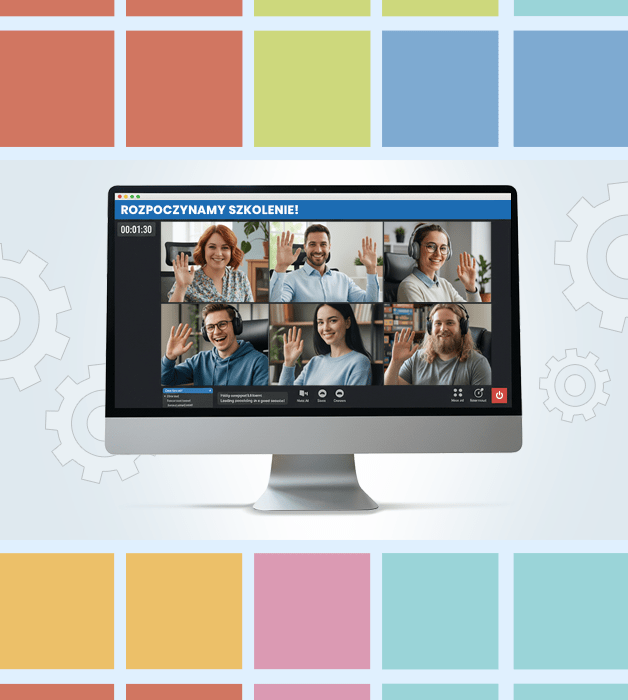
Why Guaranteed Training?
- Guaranteed execution – the training takes place regardless of the number of participants.
- Knowledge exchange and networking with professionals from various industries.
- Interactive, live-led sessions – not only theory, but also exercises and discussions.
- Flexible online format – join from anywhere.

Need Help?
Reach out to learn more about our team and the kinds of tailored solutions we can offer your organization.
Get in Touchwroclaw@nobleprog.pl or +48 (22) 103 3718