Online or onsite, instructor-led live Graph Computing training courses demonstrate through hands-on practice the various technology offerings and implementations for processing graph data, with the aim to identify real-world objects, their characteristics and relationships, then model these relationships and process them as data using graph computing approaches.
Graph Computing training is available as "online live training" or "onsite live training". Online live training (aka "remote live training") is carried out by way of an interactive, remote desktop. Onsite live Graph Computing training can be carried out locally on customer premises in podkarpackie or in NobleProg corporate training centers in podkarpackie.
NobleProg -- Your Local Training Provider
Rzeszów
RISE, Plac Wolności 13, Rzeszów, Poland, 35-073
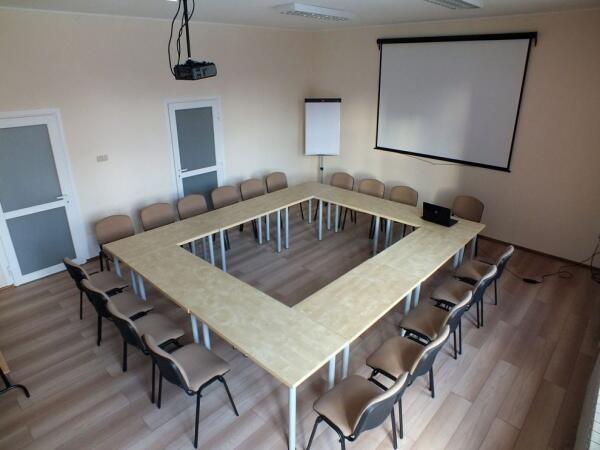
The training room is located in the very heart of Rzeszow, making it easily accessible for participants. In the immediate vicinity, there are major public transportation hubs, such as city buses (MPK), railways (PKP), and long-distance buses (PKS), facilitating access from various parts of the city and beyond. Additionally, there is an underground parking garage at the Center Park gallery nearby, providing convenient parking for those using their own vehicles.
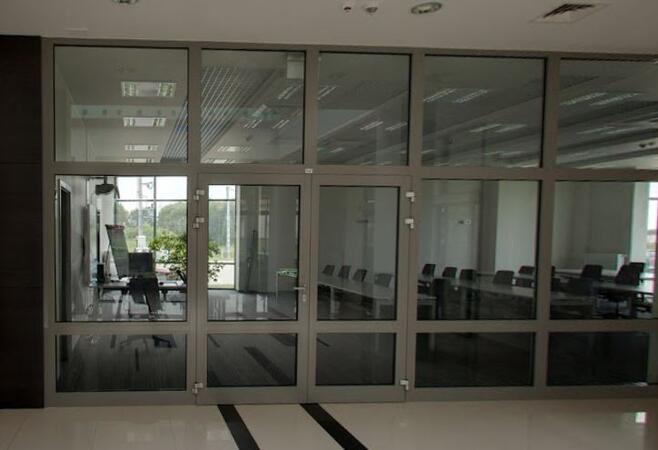
The training room is located just 10 km southwest of Rzeszow, directly on the Rzeszow-Radom route, providing easy access from both cities. Additionally, its proximity to the A4 motorway and Jasionka airport facilitates transportation for both car travelers and those utilizing air transport.
SPARQL is the W3C-standard query language used to retrieve and manipulate RDF data from triple stores and SPARQL endpoints.
This instructor-led, live training (online or onsite) is aimed at beginner-level to intermediate-level participants who wish to learn practical SPARQL querying for data retrieval, transformation, and federation.
Upon completion of this training, participants will be able to:
Construct basic and advanced SPARQL SELECT queries to retrieve RDF data.
Use FILTER, OPTIONAL, and UNION to refine query results.
Write CONSTRUCT and DESCRIBE queries to transform RDF graphs.
Query remote endpoints and perform federated queries using SERVICE.
Format of the Course
Interactive lecture and discussion.
Hands-on exercises against live SPARQL endpoints.
Guided labs with sample RDF datasets and troubleshooting.
Course Customization Options
To request a customized version focusing on your organisation’s data model or specific SPARQL endpoints, please contact us to arrange.
In this instructor-led, live training in podkarpackie, participants will learn about the technology offerings and implementation approaches for processing graph data. The aim is to identify real-world objects, their characteristics and relationships, then model these relationships and process them as data using a Graph Computing (also known as Graph Analytics) approach. We start with a broad overview and narrow in on specific tools as we step through a series of case studies, hands-on exercises and live deployments.
By the end of this training, participants will be able to:
Understand how graph data is persisted and traversed.
Select the best framework for a given task (from graph databases to batch processing frameworks.)
Implement Hadoop, Spark, GraphX and Pregel to carry out graph computing across many machines in parallel.
View real-world big data problems in terms of graphs, processes and traversals.
The Semantic Web is a collaborative movement led by the World Wide Web Consortium (W3C) that promotes common formats for data on the World Wide Web. The Semantic Web provides a common framework that allows data to be shared and reused across application, enterprise, and community boundaries.
This instructor-led, live training in podkarpackie (online or onsite) is aimed at technical persons who wish to query RDF data stored in a Semantic Web database.
By the end of this training, participants will be able to:
Understand the difference between semantic web data and relational data.
Query public datasets based on Semantic Web standards.
Model data for querying with SPARQL.
Transition a website's data to semantic web linked data.
Run SPARQL queries from within an existing application.
Online Graph Computing training in podkarpackie, Graph Computing training courses in podkarpackie, Weekend Graph Computing courses in podkarpackie, Evening Graph Computing training in podkarpackie, Graph Computing instructor-led in podkarpackie, Graph Computing instructor-led in podkarpackie, Graph Computing boot camp in podkarpackie, Graph Computing private courses in podkarpackie, Weekend Graph Computing training in podkarpackie, Online Graph Computing training in podkarpackie, Graph Computing one on one training in podkarpackie, Graph Computing instructor in podkarpackie, Graph Computing coaching in podkarpackie, Graph Computing classes in podkarpackie, Evening Graph Computing courses in podkarpackie, Graph Computing trainer in podkarpackie, Graph Computing on-site in podkarpackie