Online or onsite, instructor-led live Enterprise Architecture (EA) training courses demonstrate through interactive discussion and hands-on practice comprehensive perspective of tools used to describe and implement the Enterprise Architecture.
Enterprise Architecture training is available as "online live training" or "onsite live training". Online live training (aka "remote live training") is carried out by way of an interactive, remote desktop. Lubelskie onsite live Enterprise Architecture trainings can be carried out locally on customer premises or in NobleProg corporate training centers.
NobleProg -- Your Local Training Provider
Zamość
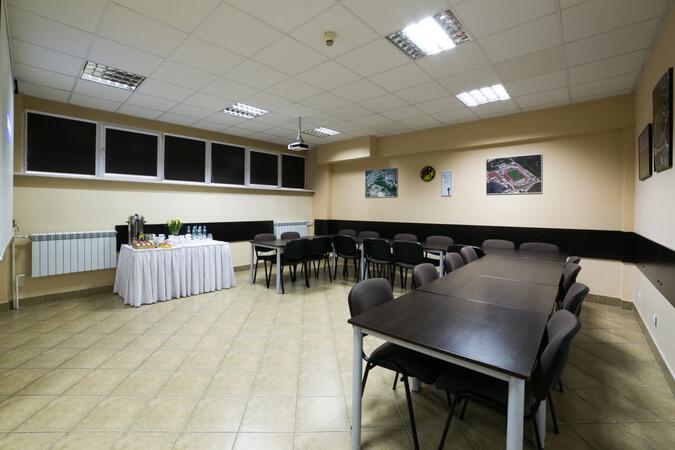
Ośrodek Sportu i Rekreacji , Królowej Jadwigi 8 , Zamość, Poland, 22-400
The training room, located in the central part of Zamość, serves as an ideal venue for workshops. Its strategic location makes it easily accessible to participants from various parts of the city and neighboring towns. Additionally, this room stands out with its rich equipment, enabling the conduct of courses in an efficient and professional manner.
Lublin
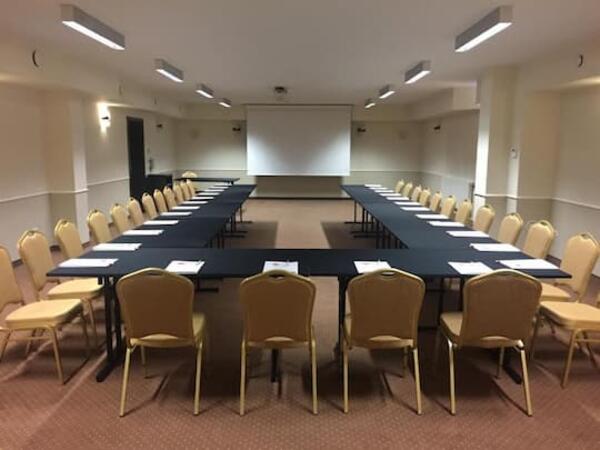
Hotel Trzy Róże, Zemborzyce Dolne 96a, Lublin, Poland, 20-515
The training rooms are equipped with modern audiovisual equipment, enabling effective presentations and interactive training sessions. Additionally, there is fast and reliable internet available, facilitating easy access to online materials and communication with the training team. The facility is located just 9 kilometers from the center of Lublin. Situated on the main S19 route towards Kraśnik, it provides convenient access from Rzeszów, Warsaw, Łódź, and Białystok. Thanks to this central location, participants can quickly and comfortably reach the training venue, further easing event organization and ensuring participant comfort.
This instructor-led, live training in lubelskie (online or onsite) is aimed at intermediate-level to advanced-level software professionals who wish to understand how to architect distributed systems that scale efficiently and handle failure gracefully.
By the end of this training, participants will be able to:
Design distributed systems that handle load, latency, and failure.
Understand key architectural patterns such as microservices, event-driven architecture, and CQRS.
Evaluate trade-offs between consistency, availability, and partition tolerance (CAP theorem).
Choose appropriate communication, storage, and coordination strategies.
This instructor-led, live training in lubelskie (online or onsite) is aimed at intermediate-level IT professionals and ICT service managers who wish to understand and apply ITSM fundamentals and practices based on ITIL 4.
By the end of this training, participants will be able to:
Understand key concepts and structure of ITIL 4.
Apply service design and architecture practices aligned with ITIL 4 principles.
Implement effective delivery and sustainability of ICT services.
Evaluate real-world cases and simulate ITSM practices.
This instructor-led, live training in lubelskie (online or onsite) is aimed at beginner-level to advanced-level architects and professionals in the field of enterprise architecture who wish to gain a comprehensive understanding and practical skills in utilizing the NAF for enterprise architecture. It covers all aspects without focusing on specific views or functions. Sparx Enterprise Architect or any other preferred tools are used.
By the end of this training, participants will be able to:
Navigate NAF documentation efficiently.
Utilize Sparx Enterprise Architect for architecture-related tasks.
Describe and understand different types of NATO architectures.
Generate and interpret NATO Architecture Views.
Identify and analyze stakeholders and Communities of Interest (CoIs).
Align stakeholders' interests with the architecture.
Analyze and document CoI's architecture interests and impacts.
This instructor-led, live training in lubelskie (online or onsite) is aimed at IT personnel who wish to learn how to correctly and properly install a structured cabling system in any building or structure.
By the end of this training, participants will be able to:
Understand the concept and infrastructure elements of a structured cabling system.
Install and test a cabling system correctly.
Learn the industry standards, techniques, and equipment used for a structured cabling system.
This 3-day instructor-led training in lubelskie covers SysML and MagicDraw/Cameo through a practical case study. It focuses on core modeling concepts and hands-on exercises, enabling system engineers to build, trace, and analyze complex models for real-world systems engineering workflows.
Architectural Patterns are proven and recognized solutions for the structure and organization of applications or information systems. These patterns define key elements, their relationships, and design principles that can be applied in software architecture to solve recurring problems in system design. Here are some popular architectural patterns:Model-View-Controller (MVC):- Divides the application into three main components: Model (business logic and data), View (user interface), and Controller (managing actions and logic).Model-View-ViewModel (MVVM):- Similar to MVC, with a central data model, view, and view model, often used in applications with user interfaces.Layered (tiered):- Divides the application into layers (e.g., presentation layer, business logic layer, data access layer) to segregate functionality.Microservices:- Designs the system as a set of smaller, independent, and isolated microservices that communicate with each other via APIs.Event-Driven Architecture (EDA):- An architecture based on events, where system components react to events and communicate through an event delivery system.Service-Oriented Architecture (SOA):- A service-based structure where the application is built as a set of services with different functionalities, which are independent and can be used by various parts of the system.Component-Based Architecture:- Designs the system based on components, where individual parts are developed independently and can be reused in different contexts.Hexagonal Architecture (Ports and Adapters):- Separates business logic from the technical layer by distinguishing between external and internal interfaces.Clean Architecture:- Focuses on dependency separation and code cleanliness through a hierarchy of layers, where inner layers do not depend on outer ones.Event Sourcing and CQRS (Command Query Responsibility Segregation):- Separates write operations (commands) and read operations (queries) in applications using separate models.Architectural patterns provide general solutions to architectural problems, helping developers design applications or software systems that are modular, scalable, flexible, and easy to maintain. Each of these patterns has its own advantages and can be applied depending on the project's specifics.
This lubelskie course introduces analysts to the key aspects of modern IT system architecture. Participants will learn about architectural patterns, risk management, and non-functional requirements. The course covers microservices, cloud computing, and practical applications of UML.
Learn Domain Driven Design to align software with business concepts. Master strategic and tactical patterns, including Ubiquitous Language and Bounded Contexts. This training in lubelskie helps teams manage complexity and build flexible, maintainable software architectures.
Using a combination of lectures, demos, and interactive labs, this course showcases the foundations for building and maintaining an Enterprise Architecture (EA) utilizing the Unified Architecture Framework (UAF) version 1.2.
This hands-on instructor-led training in lubelskie guides intermediate Go developers through designing and deploying event-driven applications using Kafka, RabbitMQ, or NATS. Learners will build decoupled services, manage messaging infrastructure, and deploy scalable, resilient cloud-native systems.
This training is designed for professionals who already hold an ITIL® 4 Foundation certification and want to update their knowledge to the latest ITIL® 5 framework. It provides a focused and efficient transition, highlighting the key differences, new concepts, and expanded practices introduced in ITIL® 5.
Designed for IT staff and management in lubelskie, this course provides a holistic understanding of IT Service Management and prepares candidates for the ITIL 4 Foundation exam, covering key concepts, guiding principles, and essential practices to enhance value delivery.
This training provides a comprehensive introduction to ITIL® 5 - the modern framework for managing digital products and services in today’s fast-changing environments. It equips participants with a solid understanding of how organizations can create value through effective service management and collaboration.
This instructor-led, live training is aimed at beginner-level engineers and professionals who wish to use MBPLE within CATIA Magic to understand and implement product line engineering concepts.
By the end of this training, participants will be able to:
Understand the key concepts and vocabulary of PLE and MBPLE
Describe best practices for product line modeling
Implement a product line definition process in CATIA Magic
Use MBPLE features such as feature models, variation points, and configurations
The course is designed to teach the fundamentals of the Systems Modeling Language (SysML), its application through the MagicDraw/Cameo software, basic Model-Based Systems Engineering (MBSE) simulation techniques, and best practices in MBSE. This training covers the fundamentals of creating templates and generating reports within the MagicDraw/Cameo tool suite, and teaches how macros and scripts work inside MagicDraw and what they can be applied to.
The course is designed to teach the fundamentals of the Systems Modeling Language (SysML), its application through the MagicDraw/Cameo software, basic Model-Based Systems Engineering (MBSE) simulation techniques, and best practices in MBSE. This training is also designed to provide professionals with a background behind architectural simulation, an introduction to the Simulation Toolkit plugin, the simulation of multiple diagram types, and how to tie diagram simulations together to automate the architecture.
The course is designed to teach the fundamentals of the Systems Modeling Language (SysML), its application through the MagicDraw/Cameo software, basic Model-Based Systems Engineering (MBSE) simulation techniques, and best practices in MBSE. This training teaches the core concepts and features of validation rules, validation suites, and model metrics and is designed to introduce the core concepts and features of developing and utilizing model queries in MagicDraw/Cameo.
The course is designed to teach the fundamentals of the Systems Modeling Language (SysML), its application through the MagicDraw/Cameo software, basic Model-Based Systems Engineering (MBSE) simulation techniques, and best practices in MBSE. This training provides a basic introduction to the core concepts and features of CATIA No Magic’s Teamwork Cloud, along with introducing the core concepts and features of Domain Specific Languages (DSL) in MagicDraw.
This instructor-led, live training in lubelskie (online or onsite) is aimed at intermediate-level professionals who wish to understand and apply NAF to support enterprise architecture design and decision-making across defense-related projects.
By the end of this training, participants will be able to:
Understand the structure and purpose of the NATO Architecture Framework.
Identify and describe various architecture views within NAF.
Map stakeholder requirements to architectural components.
Use tools like Sparx Enterprise Architect to create NAF-compliant models.
This course provides a mix of module-based lectures, instructor demonstration, and hands-on labs. Our trainers are all experienced practitioners who understand the balance of theory and practicality.
This instructor-led, live training in (online or onsite) is aimed at beginner-level to intermediate-level PCB designers and electronics engineers who wish to develop a complete and controlled PCB design workflow using Altium Designer.
Participants work on one connected project, progressing from project setup and component libraries through schematic capture, PCB layout and verification to manufacturing outputs and controlled production release.
By the end of this training, participants will be able to:
Create and manage structured Altium Designer PCB projects.
Build and validate schematic designs and component libraries.
Configure PCB rules, routing, DRC and manufacturing constraints.
Generate and verify fabrication, assembly and mechanical outputs.
Apply practical high-speed design constraints.
Manage engineering changes and controlled re-releases.
This instructor-led live training, available online or on-site, is designed for beginner and intermediate PCB designers and electronic engineers who wish to master the complete and controlled PCB design process in Altium Designer.
Participants work on a single common project – from environment configuration and library preparation, through schematic and PCB layout, to the generation of production data and controlled project release.
Upon completion of the training, participants will be able to:
Create and organize PCB projects in Altium Designer.
Build and verify schematics and component libraries.
Configure PCB rules, routing, DRC, and production constraints.
Generate and check production, assembly, and mechanical documentation.
Apply basic constraints for high-speed signals.
Manage engineering changes and controlled project re-release.
This instructor-led, live training in (online or onsite) is aimed at beginner to intermediate-level professionals who wish to understand configuration management risks and apply product line engineering concepts with or without dedicated tools.
By the end of this training, participants will be able to: Analyze risks related to product changes throughout the lifecycle; Apply best practices in configuration management; Understand key concepts of product line engineering; Model variability and product lines with or without tools; Implement an end-to-end process from variability definition to product derivation; And evaluate the benefits of using tools such as pure::variants and FeatureIDE
This instructor-led, live training in (online or onsite) is aimed at beginner-level professionals who wish to use pure::variants to understand and implement product line engineering concepts.
By the end of this training, participants will be able to:
Understand product line engineering concepts applied with pure::variants
Analyze best practices for product line modeling
Implement an end-to-end variability process (from definition to variant instantiation)
Use pure::variants with connectors such as Microsoft Office
This instructor-led, live training in (online or onsite) is aimed at system administrators and infrastructure engineers who wish to design, deploy, and manage private OpenStack cloud infrastructure for enterprise environments.
By the end of this training, participants will be able to understand OpenStack architecture, deploy private cloud infrastructure, manage compute and storage resources, implement security with Keystone, and apply enterprise best practices.
This instructor-led, live training (online or onsite) is aimed at beginner-level professionals who wish to understand the value, challenges, and implementation principles of MBSE using the ARCADIA method and the Capella tool.
By the end of this training, participants will be able to Understand the principles and benefits of MBSE; Describe the ARCADIA methodology and its positioning within systems engineering; Explain the added value of Capella compared to traditional document-based tools; Identify impacts of MBSE adoption on engineering processes and practices; and Understand MBSE contribution to digital continuity and multidisciplinary collaboration
This instructor-led, live training (online or onsite) is aimed at beginner to intermediate-level professionals who wish to learn and apply MBSE using the ARCADIA method and the Capella tool.
By the end of this training, participants will be able to: Understand MBSE principles and their alignment with ISO 15288:2023; Describe the ARCADIA methodology and its different architectural layers; Apply ARCADIA from operational need to physical architecture; Use Capella to build, analyze, and manage system models; Implement best practices in system modeling through a real case study
This instructor-led, live training (online or onsite) is aimed at professionals and domain experts who wish to understand MBSE concepts and efficiently review system models created using the ARCADIA method and the Capella tool.
By the end of this training, participants will be able to:
Understand the ARCADIA methodology and its architectural layers
Navigate and interpret Capella models
Assess the consistency of models with system requirements and architecture
Perform structured model reviews
Add clear and relevant review comments within Capella
This 3-day training in lubelskie equips system engineers with UML 2 and SysML skills for efficient requirements gathering and embedded software design. Learn to trace business rules to implementation, modeling blocks and interactions using Enterprise Architect for agile, coherent system architectures.
This practical course in lubelskie delivers a deep understanding of systems modelling using the latest OMG SysML specification. It covers notation and semantics, enabling students to apply their skills to any suitable system modelling method or tool for real-world applications.
In this instructor-led, live training in lubelskie (online or onsite), participants will learn how to use SysML as implemented in Enterprise Architect (EA) to carry out system requirements analysis and modeling.
By the end of this training, participants will be able to:
Understand and apply SysML to Systems Engineering projects, using a Model Based Systems Engineering (MBSE) approach.
Identify system requirements based on use case models.
In this live training held in lubelskie, participants will explore the deep interplay between software, technical, and enterprise architecture. Learn to manage complex distributed systems and trade-offs while mastering common patterns for SOA, microservices, and efficient communication between systems.
A hands-on workshop in lubelskie for analysts and developers, focusing on UML modeling with Enterprise Architect. Learn advanced capabilities like MDA and XMI to streamline problem analysis and design documentation while mastering best practices for efficient system modeling.
Read more...
Last Updated:
Testimonials (4)
The explanation of all components and usages of them on the examples
Olga Elizova
Course - Enterprise Architecture in the UAF
The clearest shift for me: value isn't something we deliver — it's co-created and only exists as the customer perceives it, net of the costs and risks we impose on them. That reframes how I look at delivery and presales: not "did we meet the SLA" but "did the client actually achieve the outcome they were after."
Ciprian Sebestyen - Public
Course - ITIL® Foundation V5
In my opinion large amount of practical examples is very helpful to understand subject.
Online Enterprise Architecture training in lubelskie, Enterprise Architecture training courses in lubelskie, Weekend Enterprise Architecture courses in lubelskie, Evening Enterprise Architecture training in lubelskie, Enterprise Architecture instructor-led in lubelskie, Enterprise Architecture private courses in lubelskie, Enterprise Architecture instructor-led in lubelskie, Online Enterprise Architecture training in lubelskie, Weekend Enterprise Architecture training in lubelskie, Enterprise Architecture coaching in lubelskie, Enterprise Architecture on-site in lubelskie, Enterprise Architecture classes in lubelskie, Evening Enterprise Architecture courses in lubelskie, Enterprise Architecture one on one training in lubelskie, Enterprise Architecture boot camp in lubelskie, Enterprise Architecture trainer in lubelskie, Enterprise Architecture instructor in lubelskie