Online or onsite, instructor-led live Containers and Virtual Machines (VMs) training courses demonstrate through hands-on practice the fundamentals and advanced topics of Containers and Virtual Machines (VMs).
Containers and Virtual Machines (VMs) training is available as "online live training" or "onsite live training". Online live training (aka "remote live training") is carried out by way of an interactive, remote desktop. Onsite live Containers and Virtual Machines (VMs) trainings in lubelskie can be carried out locally on customer premises or in NobleProg corporate training centers.
NobleProg -- Your Local Training Provider
Zamość
Ośrodek Sportu i Rekreacji , Królowej Jadwigi 8 , Zamość, Poland, 22-400
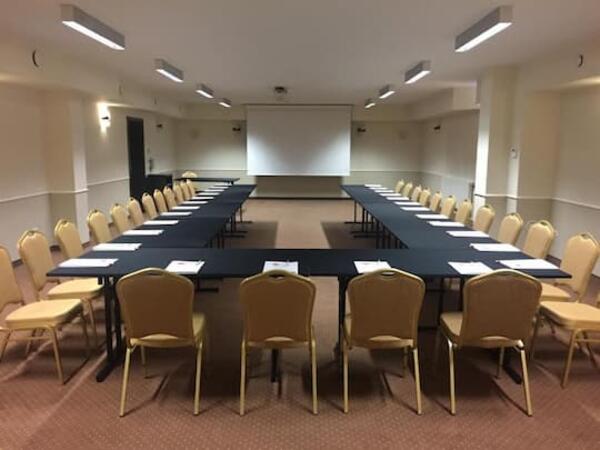
The training room, located in the central part of Zamość, serves as an ideal venue for workshops. Its strategic location makes it easily accessible to participants from various parts of the city and neighboring towns. Additionally, this room stands out with its rich equipment, enabling the conduct of courses in an efficient and professional manner.
Lublin
Hotel Trzy Róże, Zemborzyce Dolne 96a, Lublin, Poland, 20-515
The training rooms are equipped with modern audiovisual equipment, enabling effective presentations and interactive training sessions. Additionally, there is fast and reliable internet available, facilitating easy access to online materials and communication with the training team. The facility is located just 9 kilometers from the center of Lublin. Situated on the main S19 route towards Kraśnik, it provides convenient access from Rzeszów, Warsaw, Łódź, and Białystok. Thanks to this central location, participants can quickly and comfortably reach the training venue, further easing event organization and ensuring participant comfort.
Edge AI is a paradigm focused on running machine learning inference close to data sources to achieve low-latency, efficient, and scalable processing.
This instructor-led, live training (online or onsite) is aimed at intermediate-level to advanced-level practitioners who wish to deploy, orchestrate, and optimize AI workloads on Kubernetes-based edge environments.
By completing this course, participants will be able to:
Set up lightweight Kubernetes distributions for edge deployments.
Deploy AI inference workloads effectively across constrained edge nodes.
Manage connectivity challenges and synchronization patterns.
Optimize performance, storage, and networking for real-world edge scenarios.
Format of the Course
Guided presentations supported by real-world examples.
Scenario-based labs and practical edge deployment exercises.
Hands-on experience with Kubernetes edge frameworks.
Course Customization Options
To request a customized training tailored to your edge platform needs, please contact us to arrange.
Kubernetes is a container orchestration platform widely used for managing distributed applications at scale.
This instructor-led, live training (online or onsite) is aimed at advanced-level practitioners who wish to apply AI and machine learning techniques to optimize Kubernetes resource usage, scheduling decisions, and autoscaling strategies.
At the completion of this program, participants will be able to:
Apply AI/ML models to improve workload scheduling decisions in Kubernetes.
Use predictive analytics to optimize CPU, GPU, and memory allocation.
Implement intelligent autoscaling using reinforcement learning and metric forecasting.
Reduce infrastructure cost and latency through automated resource optimization.
Format of the Course
Instructor-guided technical presentations and deep-dive discussions.
Hands-on lab work using real Kubernetes clusters.
Practical exercises applying AI models to real operational scenarios.
Course Customization Options
To tailor this course to your platform setup or operational requirements, please contact us for customization.
MLOps on Kubernetes is a framework for automating the training, validation, packaging, and deployment of machine learning models using containerized pipelines and GitOps workflows.
This instructor-led, live training (online or onsite) is aimed at intermediate-level practitioners who wish to build automated, scalable MLOps pipelines on Kubernetes.
After completing this training, participants will be equipped to:
Design end-to-end CI/CD pipelines for machine learning.
Implement GitOps workflows for model deployment and versioning.
Automate training, testing, and packaging of ML models.
Integrate monitoring, alerting, and rollback strategies.
Format of the Course
Instructor-guided presentations and technical deep dives.
Hands-on exercises that build real-world CI/CD workflows.
Live-lab practice deploying ML workloads to Kubernetes.
Course Customization Options
Organizations may request tailored content aligned with their internal MLOps tools and infrastructure.
Kubeflow is an open-source platform designed to streamline building, training, and deploying machine learning workloads on Kubernetes.
This instructor-led, live training (online or onsite) is aimed at beginner-level to intermediate-level professionals who wish to build reliable ML workflows using Kubeflow.
Upon completion of this training, attendees will gain the skills to:
Navigate the Kubeflow ecosystem and core components.
Build reproducible workflows with Kubeflow Pipelines.
Run scalable training jobs on Kubernetes.
Serve machine learning models efficiently using Kubeflow Serving.
Format of the Course
Guided presentations and collaborative discussions.
Hands-on labs with real Kubeflow components.
Practical exercises to build end-to-end ML workflows.
Course Customization Options
Customized versions of this training can be arranged to align with your team’s technology stack and project requirements.
CI/CD for AI is a structured approach to automating model packaging, testing, containerization, and deployment using continuous integration and continuous delivery pipelines.
This instructor-led, live training (online or onsite) is aimed at intermediate-level professionals who wish to automate end-to-end AI model delivery workflows using Docker and CI/CD platforms.
As the training concludes, participants will be able to:
Create automated pipelines for building and testing AI model containers.
Implement version control and reproducibility for model lifecycles.
Integrate automated deployment strategies for AI services.
Apply CI/CD best practices tailored to machine learning operations.
Format of the Course
Instructor-guided presentations and technical discussions.
Practical labs and hands-on implementation exercises.
Realistic CI/CD workflow simulations in a controlled environment.
Course Customization Options
If your organization requires customized pipeline workflows or platform integrations, please contact us to tailor this course.
This instructor-led, live training in lubelskie (online or onsite) is aimed at advanced-level Kubernetes administrators and DevOps engineers who wish to enhance their monitoring skills for Kubernetes clusters using Prometheus and Grafana.
By the end of this training, participants will be able to:
Set up Prometheus and Grafana for Kubernetes monitoring.
Monitor key metrics for pods, nodes, and services.
Create dynamic dashboards to visualize cluster health and performance.
Implement alerting strategies for proactive issue resolution.
Apply best practices for scaling monitoring solutions in Kubernetes environments.
Hybrid AI deployment is the practice of running AI inference across cloud, on-premise, and edge environments using unified container-based workflows.
This instructor-led, live training (online or onsite) is aimed at advanced-level professionals who wish to design and deploy distributed AI inference systems across heterogeneous environments.
Upon completion of this training, participants will be able to:
Build secure and scalable containerized AI services for multi-location environments.
Deploy AI inference workloads to cloud, local servers, and edge devices using Docker.
Integrate orchestration tools to automate distributed AI operations.
Optimize inference latency, reliability, and resilience across diverse infrastructure.
Format of the Course
Guided presentations and expert-led discussions.
Extensive hands-on practice and applied exercises.
Real-world experimentation in a controlled live-lab setup.
Course Customization Options
For tailored adjustments to align this course with your organization’s infrastructure or use cases, please contact us to customize the training.
Kubernetes is an open-source platform for automating deployment, scaling, and management of containerized applications.
This instructor-led, live training (online or onsite) is aimed at beginner-level to intermediate-level IT professionals who wish to learn the core concepts and components of Kubernetes and use it to manage containerized applications at scale.
By the end of this training, participants will be able to:
Understand Kubernetes architecture and components.
Deploy and manage containers in a Kubernetes cluster.
Configure networking, storage, and scaling for workloads.
Troubleshoot common issues and follow best practices for cluster operations.
Format of the Course
Interactive lecture and discussion.
Lots of exercises and practice.
Hands-on implementation in a live-lab environment.
Course Customization Options
To request a customized training for this course, please contact us to arrange.
This instructor-led, live training in lubelskie (online or onsite) is aimed at DevOps engineers and developers who wish to use Kubernetes to build, deploy, and manage containers and cluster components in a secure and scalable environment.
By the end of this training, participants will be able to:
Understand the architecture, core concepts, and components of a Kubernetes ecosystem.
Set up, install, and configure a Kubernetes cluster for container orchestration.
Learn how to execute Kubernetes operations using the command line tools.
Get a hands-on experience from basic to advanced Kubernetes operations and administration.
Docker is a containerization platform used to build portable, isolated, and secure deployment environments for AI inference services.
This instructor-led, live training (online or onsite) is aimed at beginner-level to intermediate-level technical professionals who wish to build secure, portable AI inference microservices that can be deployed consistently across local machines, servers, or cloud VMs.
By the conclusion of this workshop, participants will be able to:
Build lightweight inference containers for local and cloud deployment.
Secure containerized AI services using best-practice techniques.
Implement portable microservice workflows for consistent environments.
Deploy AI inference endpoints across diverse infrastructures.
Format of the Course
Guided lectures paired with practical demonstrations.
Hands-on exercises to reinforce deployment and security techniques.
Live-lab practice for building and running portable inference services.
Course Customization Options
To tailor this training to your infrastructure or AI tooling stack, please contact us to arrange.
In this instructor-led, live training in lubelskie (onsite or remote), participants will learn how to deploy a collection of sample servers inside containers, then automate, scale, and manage their containerized servers within a Kubernetes cluster. The training goes on to more advanced topics, walking participants through the process of securing, networking and monitoring a Kubernetes cluster.
By the end of this training, participants will be able to:
Set up and run a Docker container.
Deploy containerized databases and servers.
Set up a Docker and Kubernetes cluster.
Use Kubernetes to deploy and manage different environments under the same cluster.
GPU acceleration is essential for running high-performance deep learning workloads in a scalable and efficient manner.
This instructor-led, live training (online or onsite) is aimed at intermediate-level technical professionals who wish to configure, optimize, and run GPU-enabled AI workloads inside Docker containers.
At the conclusion of this course, participants will be able to:
Build and run GPU-enabled containers for training and inference.
Configure CUDA, drivers, and runtime libraries for containerized AI workflows.
Optimize resource allocation and isolation for GPU-intensive applications.
Deploy scalable, containerized deep learning services in production environments.
Format of the Course
Interactive instruction supported by real-world demonstrations.
Exercise-driven practice focused on GPU-enabled development.
Hands-on implementation in a live-lab environment.
Course Customization Options
For tailored training aligned with your infrastructure or GPU stack, please contact us to arrange.
This instructor-led, live training in lubelskie (online or onsite) is aimed at intermediate-level professionals who wish to effectively deploy, manage, and scale containerized applications using Kubernetes.
By the end of this training, participants will be able to:
Understand the Kubernetes architecture and its components.
Isolate resources effectively using Namespaces.
Manage and customize workloads with Deployments, StatefulSets, and DaemonSets.
Define computational resources using Requests and Limits.
Work with Jobs and CronJobs for scheduled tasks.
Understand Services and DNS within Kubernetes.
Expose applications using Ingress.
Manage ConfigMaps, Secrets, and Persistent Volumes.
Scale and upgrade Kubernetes clusters using advanced strategies.
This instructor-led, live training in lubelskie (online or onsite) is aimed at intermediate-level to advanced-level developers, DevOps professionals, and architects who wish to design, deploy, and manage resilient applications using microservices, containers, and continuous integration/continuous deployment (CI/CD) pipelines.
By the end of this training, participants will be able to:
Understand and implement microservices architecture.
Deploy and manage containerized applications with Docker and Kubernetes.
Set up and optimize CI/CD pipelines for automated deployments.
Apply best practices for security, monitoring, and observability.
This instructor-led, live training in lubelskie (online or onsite) is aimed at advanced-level platform engineers and DevOps professionals who wish to master scaling applications using microservices and Kubernetes.
By the end of this training, participants will be able to:
Design and implement scalable microservices architectures.
Deploy and manage applications on Kubernetes clusters.
Utilize Helm charts for efficient service deployment.
Monitor and maintain the health of microservices in production.
Apply best practices for security and compliance in a Kubernetes environment.
Learn the fundamentals of containers, Kubernetes and OpenShift in a practical, hands-on training designed for developers, DevOps engineers and IT professionals. Participants will learn how to build containerized applications, deploy workloads, manage Kubernetes resources and use OpenShift to streamline modern application delivery in cloud and hybrid environments.
Docker is a containerization platform used to build reproducible, portable, and scalable environments for ML systems.
This instructor-led, live training (online or onsite) is aimed at intermediate-level to advanced-level technical professionals who wish to containerize and operationalize complete ML pipelines using Docker.
Upon completion of this training, participants will be able to:
Containerize ML training, validation, and inference workloads.
Design and orchestrate end-to-end ML pipelines using Docker and supporting tools.
Implement versioning, reproducibility, and CI/CD for ML components.
Deploy, monitor, and scale ML services in containerized environments.
Format of the Course
Interactive lectures supported by practical demonstrations.
Hands-on exercises focused on building real ML pipeline components.
Live-lab implementation for end-to-end containerized workflows.
Course Customization Options
For customized training aligned with specific ML infrastructure needs, please contact us to discuss options.
Docker is a containerization platform that enables consistent, portable, and reproducible environments for AI and machine learning workloads.
This instructor-led, live training (online or onsite) is aimed at intermediate-level professionals who wish to package ML codebases, dependencies, and models using Docker for reliable development-to-production workflows.
After completing this course, participants will be able to:
Build and manage Docker images tailored for AI and ML applications.
Containerize machine learning pipelines, tools, and dependencies.
Optimize Docker environments for performance and portability.
Deploy containerized ML services across different runtime environments.
Format of the Course
Concept demonstrations supported by guided discussion.
Hands-on exercises focused on real-world containerization tasks.
Practical implementation using live-lab Docker environments.
Course Customization Options
To customize this training for your organizational environment, please contact us to arrange.
This instructor-led, live training in lubelskie (online or onsite) is aimed at beginner-level developers who wish to learn the basics of Kubefirst and how it simplifies, secures, and accelerates Kubernetes and Swarm cluster management at enterprise scale.
By the end of this training, participants will be able to:
Set up a Kubefirst development environment.
Write and run a basic Kubefirst program.
Annotate code with Kubefirst directives and clauses.
This instructor-led, live training in lubelskie (online or onsite) is aimed at intermediate-level developers and DevOps engineers who wish to use Minikube as a part of their development workflow.
By the end of this training, participants will be able to:
Set up and manage a local Kubernetes environment using Minikube.
Understand how to deploy, manage, and debug applications on Minikube.
Integrate Minikube into their continuous integration and deployment pipelines.
Optimize their development process using Minikube's advanced features.
Apply best practices for local Kubernetes development.
This instructor-led, live training in lubelskie (online or onsite) is aimed at intermediate-level developers and DevOps engineers who wish to build, deploy, and manage microservices using Spring Cloud and Docker.
By the end of this training, participants will be able to:
Develop microservices using Spring Boot and Spring Cloud.
Containerize applications with Docker and Docker Compose.
Implement service discovery, API gateways, and inter-service communication.
Monitor and secure microservices in production environments.
Deploy and orchestrate microservices using Kubernetes.
This instructor-led, live training in lubelskie (online or onsite) is aimed at beginner-level to intermediate-level software developers and DevOps professionals who wish to learn how to set up and manage a local Kubernetes environment using Minikube.
By the end of this training, participants will be able to:
Install and configure Minikube on their local machine.
Understand the basic concepts and architecture of Kubernetes.
Deploy and manage containers using kubectl and the Minikube dashboard.
Set up persistent storage and networking solutions for Kubernetes.
Utilize Minikube for developing, testing, and debugging applications.
In this instructor-led, live training in lubelskie (onsite or remote), participants will learn how to create and manage Docker containers, then deploy a sample application inside a container. Participants will also learn how to automate, scale, and manage their containerized applications within a Kubernetes cluster. Finally, the training goes on to more advanced topics, walking participants through the process of securing, scaling and monitoring a Kubernetes cluster.
By the end of this training, participants will be able to:
Set up and run a Docker container.
Deploy a containerized server and web application.
Build and manage Docker images.
Set up a Docker and Kubernetes cluster.
Use Kubernetes to deploy and manage a clustered web application.
The Certified Kubernetes Administrator (CKA) program was created by The Linux Foundation and the Cloud Native Computing Foundation (CNCF).
Kubernetes is nowadys a leading platform used for containers orchestration.
NobleProg have been delivering Docker & Kubernetes training from 2015. With more than 360 successfully completed training projects, we became one of the best known training companies worldwide in field of containerization.
Since 2019 we are also helping our customers to confirm their performance in k8s environment by preparing them and encouraging to pass CKA and CKAD exams.
This instructor-led, live training (online or onsite) is aimed at System Administrators, Kubernetes users who wish to confirm their knowledge by passing CKA exam.
On the other hand, training is focused also on gaining practical experience in Kubernetes Administration, so we recommend taking part in it, even if you don't intend to take CKA exam.
Format of the Course
Interactive lecture and discussion.
Lots of exercises and practice.
Hands-on implementation in a live-lab environment.
Course Customization Options
To request a customized training for this course, please contact us to arrange.
To learn more about CKA certification, please visit: https://training.linuxfoundation.org/certification/certified-kubernetes-administrator-cka
In this instructor-led, live training in lubelskie (online or onsite), participants will learn how to set up and manage a production-scale container environment using Kubernetes on AKS.
By the end of this training, participants will be able to:
Configure and manage Kubernetes on AKS.
Deploy, manage and scale a Kubernetes cluster.
Deploy containerized (Docker) applications on Azure.
Migrate an existing Kubernetes environment from on-premise to AKS cloud.
Integrate Kubernetes with third-party continuous integration (CI) software.
Ensure high availability and disaster recovery in Kubernetes.
Learn how to build, deploy and administer containerized environments using Docker, Kubernetes and OpenShift. This five-day, hands-on training covers container images, Kubernetes workloads, cluster networking, storage, security, monitoring and practical OpenShift administration. Participants gain the skills needed to operate modern container platforms and troubleshoot applications across development and production environments.
This instructor-led, live training (online or onsite) is aimed at engineers wishing to automate, secure, and monitor containerized applications in a large-scale Kubernetes cluster.
By the end of this training, participants will be able to:
Use Kubernetes to deploy and manage different environments under the same cluster
Secure, scale and monitor a Kubernetes cluster
Format of the Course
Interactive lecture and discussion
Lots of exercises and practice
Hands-on implementation in a live-lab environment
Course Customization Options
To request a customized training for this course, please contact us to arrange.
The Certified Kubernetes Application Developer (CKAD) program has been developed by The Linux Foundation and the Cloud Native Computing Foundation (CNCF), the host of Kubernetes.
This instructor-led, live training (online or onsite) is aimed at Developers who wish to confirm their skills in design, build, configure, and expose cloud native applications for Kubernetes.
On the other hand, training is also focused on gaining practical experience in Kubernetes application development, so we recommend taking part in it, even if you don't intend to take CKAD exam.
NobleProg have been delivering Docker & Kubernetes training from 2015. With more than 360 successfully completed training projects, we became one of the best known training company worldwide in field of containerization. Since 2019 we are also helping our customers to confirm their performance in k8s environment by preparing them and encouraging to pass CKA and CKAD exams.
Format of the Course
Interactive lecture and discussion.
Lots of exercises and practice.
Hands-on implementation in a live-lab environment.
Course Customization Options
To request a customized training for this course, please contact us to arrange.
To learn more about CKAD, please visit: https://training.linuxfoundation.org/certification/certified-kubernetes-application-developer-ckad/
This instructor-led, live course in lubelskie provides participants with an overview of Rancher and demonstrates through hands-on practice how to deploy and manage a Kubernetes cluster with Rancher.
Istio is an open-source service mesh that runs on Kubernetes to provide secure, observable, and manageable connectivity between microservices. By leveraging Istio’s Envoy-based sidecar proxies, teams can enforce policies, secure communications with mTLS, gain deep observability into traffic, and improve reliability at scale.
This instructor-led, live training (online or onsite) is aimed at intermediate-level engineers who wish to deploy, secure, and manage microservices applications using Istio on Kubernetes.
By the end of this training, participants will be able to:
Install and configure Istio on Kubernetes clusters.
Understand and apply service mesh concepts including traffic management, security, and observability.
Deploy microservices applications within an Istio service mesh.
Secure service-to-service communications with mutual TLS (mTLS) and Zero Trust principles.
Monitor, trace, and troubleshoot microservices with Prometheus, Grafana, and Jaeger.
Integrate Istio with Calico for advanced network policies and security.
Format of the Course
Interactive lecture and discussion.
Lots of exercises and practice.
Hands-on implementation in a live-lab environment.
Course Customization Options
To request a customized training for this course, please contact us to arrange.
The evolution of microservices and containers in recent years has significantly changed how we design, develop, deploy and run software. Modern applications must be optimized for scalability, elasticity, failure, and change. Driven by these new demands, modern architectures require a different set of patterns and practices. In this training, we examine ways to identify, understand and adjust to these new requirements.
Audience
This training is intended for people who are somewhat familiar with container technology and with Kubernetes concepts but are perhaps lacking the real world experience. It is based on use cases, and lessons learnt from real life projects with the intention of making people inspired to create and manage even better cloud native applications.
Developers
Operations
DevOps
QA Engineers
IT Project Managers
Format of the Course
Interactive lecture and discussion
Lots of exercises and practice
Handson implementation in a live-lab environment
Course Customization Options
To request a customized training for this course, please contact us to arrange.
This instructor-led, live training in lubelskie (online or onsite) is aimed at engineers who wish to use Helm to streamline the process of installing and managing Kubernetes applications.
By the end of this training, participants will be able to:
Install and configure Helm.
Create reproducible builds of Kubernetes applications.
Share applications as Helm charts.
Run third-party applications saved as Helm charts.
This instructor-led, live training in lubelskie (online or onsite) is aimed at DevOps engineers who wish to use Kubernetes and Gitlab to automate the DevOps lifecycle.
By the end of this training, participants will be able to:
Automate application builds, tests, and deployments.
Create an automated build infrastructure.
Deploy an application to a containerized cloud environment.
This instructor-led, live training in lubelskie (online or onsite) is aimed at Kubernetes practitioners who wish to prepare for the CKS exam.
By the end of this training, participants will know how to secure Kubernetes environments and container-based applications throughout the different stages of an application's life cycle: build, deployment and runtime.
This instructor-led, live training in lubelskie (online or onsite) is aimed at developers and DevOps engineers who wish to utilize a serverless approach for building enterprise applications in Kubernetes.
By the end of this training, participants will be able to:
Setup and configure the Kubernetes system to start developing with a serverless architecture.
Understand the concepts and principles foundational to serverless environments.
Operate toolchains necessary to serverless development and integrate it with Kubernetes components.
Practice their skill in Python programming language and apply it to implement serverless systems.
Secure enterprise applications that are deployed through a serverless framework on Kubernetes.
Utilize modern cloud computing methods in optimizing DevOps task processing workflows.
This instructor-led, live training in lubelskie (online or onsite) is aimed at engineers who wish to secure a Kubernetes cluster beyond the default security settings.
By the end of this training, participants will be able to:
Understand the vulnerabilities that are exposed by a default Kubernetes installation.
Prevent unauthenticated access to the Kubernetes API, database, and other services.
Protect a Kubernetes cluster from accidental or malicious access.
Put together a comprehensive security policy and set of best practices.
The "Advanced Docker and Kubernetes" course is a comprehensive training covering the Kubernetes platform and its ecosystem. It is designed for participants with varying levels of experience, offering a full range of both fundamental and advanced Kubernetes features. The course covers key concepts such as Pods, Labels, Controllers, Services, Secrets, Persistent Data Volumes, Claims, Namespaces, Quotas, the Container Networking Model, Service Discovery, Scaling, Load Balancing, Cluster Management, Kubernetes Installation, Cluster Security, Access Control, High Availability of the Control Plane, Monitoring and Logging, Application Auto-Scaling, Advanced Scheduling, Microservices-Based Applications, Application Design Patterns, and Application Deployment on a Kubernetes Cluster.
This instructor-led, live training in lubelskie (online or onsite) is aimed at engineers who wish to advance their knowledge of Docker so as to deploy applications at a larger scale while maintaining control.
By the end of this training, participants will be able to:
Build their own Docker images.
Deploy and manager large number of Docker applications .
Evaluate different container orchestration solutions and choose the most suitable one.
Set up a continuous integration process for Docker applications.
Integrate Docker applications with existing continuous tools integration processes.
This 7-day programme provides a comprehensive, hands-on journey into designing, deploying, and operating cloud-native applications using modern DevOps practices.
Participants will explore how to design scalable microservices architectures, optimise container environments, and manage production workloads using Kubernetes. The course covers advanced deployment strategies, GitOps-based automation, and observability practices to ensure system reliability and performance.
A strong focus is placed on real-world operational challenges, including incident response, failure simulation, and root cause analysis. The programme concludes with the use of AI-powered tools to support troubleshooting and accelerate operational decision-making.
By the end of the training, participants will have a clear understanding of how to build, deploy, monitor, and maintain resilient distributed systems in a Kubernetes-based environment.
This instructor-led, live training in lubelskie (online or onsite) is aimed at engineers who wish to use Docker to deploy and manage software as containers instead of as traditional stand-alone software.
By the end of this training, participants will be able to:
Install and configure Docker.
Understand and implement software containerization.
Managing Docker based applications.
Network different Docker applications and systems.
This instructor-led, live training in lubelskie (online or onsite) is aimed at intermediate to advanced DevOps engineers and system administrators who wish to deploy and manage self-hosted Kubernetes clusters without cloud dependencies.
By the end of this training, participants will be able to: deploy production-ready Kubernetes clusters using kubeadm on bare-metal or virtual machines; configure high-availability control planes and etcd clusters; implement container networking and storage for self-managed environments; set up monitoring and observability using self-hosted solutions.
In this instructor-led, live training in lubelskie, participants will learn the fundamentals of building microservices using Spring Cloud and Docker. Participant knowledge is put to the test through exercises and the step-by-step development of sample microservices.
By the end of this training, participants will be able to:
Understand the fundamentals of microservices.
Use Docker to build containers for microservice applications.
Build and deploy containerized microservices using Spring Cloud and Docker.
Integrate microservices with discovery services and the Spring Cloud API Gateway.
Use Docker Compose for end-to-end integration testing.
OpenShift is one of the leading Kubernetes-based platforms for deploying and managing containerized applications in cloud, hybrid and on-premises environments.
This hands-on training teaches participants how to install, administer and troubleshoot OpenShift clusters while applying security, networking and storage best practices. Through practical exercises, participants gain the skills needed to confidently manage production-ready OpenShift environments.
Learn how to develop, deploy and manage containerized applications with OpenShift, one of the leading Kubernetes-based platforms for cloud-native development. This practical training covers application deployment, containers, networking, CI/CD and DevOps workflows, giving participants the skills to build and maintain modern applications in production environments.
Gain practical skills in working with OpenShift and containers! You will learn to install and secure applications, manage resources, and automate deployments using tools such as Tekton and Istio. Join the training and develop your competencies in container technologies!
This instructor-led, live training in lubelskie (online or onsite) is aimed at intermediate-level virtualization administrators who wish to use open-source platforms to migrate away from VMware.
By the end of this training, participants will be able to:
Install and configure KVM, oVirt, and Proxmox VE.
Migrate virtual workloads from VMware.
Implement high availability and disaster recovery.
Optimize performance in open-source virtualization environments.
Read more...
Last Updated:
Testimonials (5)
Training being interactive. He engaged us a lot by asking questions and imaginary use cases. He shifted away from his agenda to explain more of the things we are demanded.
Berk Ozdilek - Deutsche Bank
Course - Kubernetes Advanced
Encouraging and openness to expanding the discussion on topics related to the training scope but with the specific context of our company
Michal Koscinski - Volkswagen Poznan Sp. z o.o.
Course - Docker, Kubernetes and OpenShift 3 for Administrators
Machine Translated
About the microservices and how to maintenance kubernetes
Yufri Isnaini Rochmat Maulana - Bank Indonesia
Course - Advanced Platform Engineering: Scaling with Microservices and Kubernetes
The training met expectations with its clear explanations, real-world examples, and hands-on labs that made complex topics easy to understand. It provided valuable insights into container orchestration, security, scaling and many other advanced topics.
Online Containers and Virtual Machines (VMs) training in lubelskie, Containers and Virtual Machines (VMs) training courses in lubelskie, Weekend Containers and Virtual Machines (VMs) courses in lubelskie, Evening Containers and Virtual Machines (VMs) training in lubelskie, Containers and Virtual Machines (VMs) instructor-led in lubelskie, Containers and Virtual Machines (VMs) boot camp in lubelskie, Evening Containers and Virtual Machines (VMs) courses in lubelskie, Containers and Virtual Machines (VMs) coaching in lubelskie, Containers and Virtual Machines (VMs) one on one training in lubelskie, Weekend Containers and Virtual Machines (VMs) training in lubelskie, Containers and Virtual Machines (VMs) instructor-led in lubelskie, Containers and Virtual Machines (VMs) instructor in lubelskie, Containers and Virtual Machines (VMs) classes in lubelskie, Containers and Virtual Machines (VMs) private courses in lubelskie, Containers and Virtual Machines (VMs) trainer in lubelskie, Containers and Virtual Machines (VMs) on-site in lubelskie, Online Containers and Virtual Machines (VMs) training in lubelskie